Showing posts with label climate change. Show all posts

Sunday, June 4, 2023

Feb, Bog and Swamp by A. Proulx


Summary (Amazon):

From Pulitzer Prize winner Annie Proulx—whose novels are infused with her knowledge and deep concern for the earth—comes a riveting, revelatory history of our wetlands, their ecological role, and what their systematic destruction means for the planet.

A lifelong environmentalist, Annie Proulx brings her wide-ranging research and scholarship to the subject of wetlands and the vitally important yet little understood role they play in preserving the environment—by storing the carbon emissions that greatly contribute to climate change. Fens, bogs, swamps, and marine estuaries are the earth’s most desirable and dependable resources, and in four stunning parts, Proulx documents the long-misunderstood role of these wetlands in saving the planet.

Taking us on a fascinating journey through history, Proulx shows us the fens of 16th-century England to Canada’s Hudson Bay lowlands, Russia’s Great Vasyugan Mire, America’s Okeefenokee National Wildlife Refuge, and the 19th-century explorers who began the destruction of the Amazon rain forest. Along the way, she writes of the diseases spawned in the wetlands—the Ague, malaria, Marsh Fever—and the surprisingly significant role of peat in industrialization.

A sobering look at the degradation of wetlands over centuries and the serious ecological consequences, this is a stunningly important work and a rousing call to action by a writer whose passionate devotion to understanding and preserving the environment is on full and glorious display.


Interviews and Articles:


NPR: https://www.npr.org/2022/10/11/1127959575/annie-proulx-book-wetlands


Esquire: https://www.esquire.com/entertainment/books/a41234182/annie-proulx-fen-bog-swamp-interview/


Simon and Schuster Site about Authorhttps://www.simonandschuster.com/authors/Annie-Proulx/8544


(NPR)


Discussion Questions: (Anne will be leading and provided these questions)


Friday, July 1, 2022

The Seaweed Chronicles by Susan Shetterly


Summary (Amazon): “Seaweed is ancient and basic, a testament to the tenacious beginnings of life on earth,” writes Susan Hand Shetterly in this elegant, fascinating book. “Why wouldn’t seaweeds be a protean life source for the lives that have evolved since?” On a planet facing environmental change and diminishing natural resources, seaweed is increasingly important as a source of food and as a fundamental part of our global ecosystem.


In 
Seaweed Chronicles, Shetterly takes readers deep into the world of this essential organism by providing an immersive, often poetic look at life on the rugged shores of her beloved Gulf of Maine, where the growth and harvesting of seaweed is becoming a major industry. While examining the life cycle of seaweed and its place in the environment, she tells the stories of the men and women who farm and harvest it—and who are fighting to protect this critical species against forces both natural and man-made. Ideal for readers of such books as The Hidden Life of Trees and How to Read WaterSeaweed Chronicles is a deeply informative look at a little understood and too often unappreciated part of our habitat.

Reviews: 


(Bangor Daily News)  Sheep and Flat Island

Videos and Interviews:
1. Interview: Surry Historical Society: https://www.youtube.com/watch?v=Fu5Puj77aqI

(medium.com)


Discussion Questions (Anne will be leading the discussion and also wrote the questions)


(WSJ.org)


Thursday, February 3, 2022

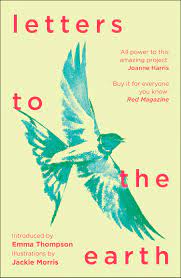
Letters to the Earth: Writing to a Planet in Crisis, Introduction by Emma Thompson


Summary (Amazon): "How can we begin to talk about what is happening to the world? How can we explain to our children, and to ourselves, what the future of our planet might look and feel like?

Letters to the Earth is the beginning of a new conversation. One that attempts to answer some of these questions by listening to the voices of parents and children; politicians and poets; songwriters and scientists. Gathering together over 100 letters written in response to the climate emergency, each entry begins to give language to the unspeakable, and shows how our collective power is present when we are ready to slow down and listen to each other.

It’s natural to feel worried or concerned about what the future of the earth holds. These letters are an opportunity to reflect on our connection to the planet and each other in times of crisis. They are also an opportunity to act and respond to this crisis. To put pen to paper and make your voice heard.

Includes contributions from activist Yoko Ono, actor Mark Rylance, poet Kate Tempest, author Laline Paull, illustrator of The Lost Words Jackie Morris, novelist Anna Hope, environmental writer Jay Griffiths Green Party MP Caroline Lucas. , Booker prize Winning author Ben Okri and actor Freya Mavor. "


Website for the Project: https://www.letterstotheearth.com/


Community and Education Toolkits for Writing a Letter: https://www.letterstotheearth.com/community-education


Facebook Pagehttps://www.facebook.com/letterstotheearth/


Organizations involved:


1. Climate Generation: https://www.climategen.org/blog/write-a-letter-to-the-earth-a-short-term-climate-writing-project/


Videos about the Project


1. https://www.youtube.com/watch?v=g8a1LEJPSbw


2. https://www.youtube.com/watch?v=E7As6yfmZf4


3. https://www.youtube.com/watch?v=hcPI7W3_cog


4. https://www.letterstotheearth.com/


5. Shakespeare's Globe Letter to the Earth: https://www.youtube.com/watch?v=LRXqNNBP8jo


6. https://www.youtube.com/watch?v=r-2xm905zd8


Reviewhttps://joyzine.org/2021/02/18/book-review-letters-to-the-earth-writing-to-a-planet-in-crisis-various-authors/


(https://www.rosekennedygreenway.org/love-letters-to-the-earth/)


This is a different book for our group. 


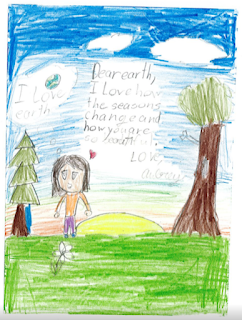
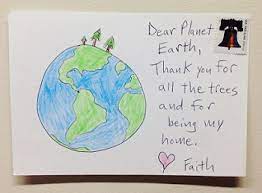
Since it's February, let's write a "Love Letter" to the Earth.


Please consider submitting here: https://www.letterstotheearth.com/submit-your-letter


(Bostonschildrenmuseum.org)


Discussion Questions:


Monday, July 26, 2021

Spirals in Time by Helen Scales


Summary: (Amazon): Seashells are the sculpted homes of a remarkable group of animals: the molluscs. These are some of the most ancient and successful animals on the planet.

But watch out. Some molluscs can kill you if you eat them. Some will kill you if you stand too close. That hasn't stopped people using shells in many ways over thousands of years. They became the first jewelry and oldest currencies; they've been used as potent symbols of sex and death, prestige and war, not to mention a nutritious (and tasty) source of food.

Spirals in Time is an exuberant aquatic romp, revealing amazing tales of these undersea marvels. Helen Scales leads us on a journey into their realm, as she goes in search of everything from snails that 'fly' underwater on tiny wings to octopuses accused of stealing shells and giant mussels with golden beards that were supposedly the source of Jason's golden fleece, and learns how shells have been exchanged for human lives, tapped for mind-bending drugs and inspired advances in medical technology. Weaving through these stories are the remarkable animals that build them, creatures with fascinating tales to tell, a myriad of spiralling shells following just a few simple rules of mathematics and evolution.

Shells are also bellwethers of our impact on the natural world. Some species have been overfished, others poisoned by polluted seas; perhaps most worryingly of all, molluscs are expected to fall victim to ocean acidification, a side-effect of climate change that may soon cause shells to simply melt away. But rather than dwelling on what we risk losing, Spirals in Time urges you to ponder how seashells can reconnect us with nature, and heal the rift between ourselves and the living world.

Reviews:

Kirkus: https://www.kirkusreviews.com/book-reviews/helen-scales/spirals-in-time/

Wall Street Journal: https://www.wsj.com/articles/natures-architects-1439579229

The Economist: https://www.economist.com/books-and-arts/2015/07/18/shell-company

(Amazon)

Author's Websitehttps://helenscales.com/spirals-in-time/

(Newscientist.com)

Interviews: 

BBC: Radio 4: https://www.bbc.co.uk/programmes/b05r0b31

Talks at Google: https://www.youtube.com/watch?v=9OFs5W3KULo

Royal Geographical Society: https://www.youtube.com/watch?v=RxkGz8yIn_8

Articles and Videos:

1. "Digital Seashells and David Raup": https://www.deepseanews.com/2015/07/digital-seashells-and-david-raup/

2. "David Raup, Who Transformed the Field of Paleontology Dies at 82": https://www.nytimes.com/2015/07/16/us/david-m-raup-who-transformed-field-of-paleontology-dies-at-82.html

3. Article and Video: Argonauts: https://oceanconservancy.org/blog/2020/10/05/paper-nautilus/https://www.theguardian.com/science/2018/mar/27/argonauts-the-astronauts-of-the-sea

Discussion Questions: (John will be leading the discussion and here are his questions.)


Thursday, July 23, 2020

Nature's Best Hope by Douglas Tallamy


Summary (edited from Amazon): Tallamy outlines his vision for a grassroots approach to conservation. Nature’s Best Hope shows how homeowners everywhere can turn their yards into conservation corridors that provide wildlife habitats. Because this approach relies on the initiatives of private individuals, it is immune from the whims of government policy. Even more important, it’s practical, effective, and easy—you will walk away with specific suggestions you can incorporate into your own yard.

Reviews:
Virginia Native Plant Society: https://vnps.org/book-review-natures-best-hope-by-doug-tallamy/
TPR Newsmedia: https://tbrnewsmedia.com/book-review-natures-best-hope/

Interviews and Webinars:
Away to Garden: https://awaytogarden.com/how-conservation-starts-in-your-yard-doug-tallamy-on-natures-best-hope/
Land Conservancy: https://www.youtube.com/watch?v=H3X6wWCWm0A
Garden for Wildlife Series: https://www.youtube.com/watch?v=iDRGryX1uVI
National Wildlife: https://www.youtube.com/watch?v=WY4aV5hqkxY
MAREA: https://themarea.org/event/douglas-tallamy-talks-live-about-natures-best-hope-and-the-opportunity-to-save-our-own-backyards/


Articles:
1. Smithsonian: https://www.smithsonianmag.com/science-nature/meet-ecologist-who-wants-unleash-wild-backyard-180974372/
2. NYTimes: https://www.nytimes.com/2020/05/15/realestate/how-and-why-to-use-native-plants.html
3. Global human influence maps reveal clear opportunities in conserving Earth's remaining terrestrial ecosystems: Global Change Biologyhttps://onlinelibrary.wiley.com/doi/full/10.1111/gcb.15109: Half the Earth is Relatively Intact from Human Influence: https://www.ucdavis.edu/news/half-earth-relatively-intact-global-human-influence/

Convention on Biological Diversity: https://www.cbd.int/convention/


Nature Needs Halfhttps://natureneedshalf.org/

Millennium Ecosystem Assessmenthttps://www.millenniumassessment.org/en/index.html
3. Plants for Birds by Audubon: https://www.audubon.org/PLANTSFORBIRDS

Discussion Questions: 


1.     What is your knowledge and use currently of native plants in your home landscape?


2.     Discuss the relationship of man to nature, how it evolved, and the causes of its breakdown.


3.     What conservation efforts and actions have been taken to try to save nature and threatened species and how effective have they been, including the national park system, Endangered Species Act, etc. (p. 30-)


4.     Occupying 1.9% of the surface of the US, turf is the single largest irrigated crop in the US and has led also to habitat destruction and fragmentation. Discuss the various cultural, ecological and evolutionary influences that have led to this situation. (p. 51-)


5.     “Carrying capacity is the ability of a particular place to support a specific species.” Discuss its relevance including impact of deer. (p. 85-)


6.     There are over 3300 invasive plants species in the United States alone. What is their impact on native plants, animals and the overall ecosystem? What are the ecological consequences?  (p. 96-, 111-)


7.     “Caterpillars are the mainstay of most bird diets in North America, particularly when birds are rearing their young.” Discuss why they are so important and what we can do to help their populations including which keystone plants to plant? (130, 168)


8.     Let’s not forget the bees and their role, including that they pollinate a third of our crops as well as pollinate 87% of all plants.  What are some steps we can take to support them?


9.     We’ve read many nature books and I’m always delighted to read yet another amazing story and learn about a new finding. What did you find surprising?


10.  Discuss Tallamy’s concept of a Homegrown National Park and what are the steps that he suggests we take to contribute to it?   (p. 205-)


Monday, January 27, 2020

Two Books this Month: A Bright Future by J. Goldstein and S. Qvist and No One is Too Small to Make a Difference by Greta Thunberg


Summary for A Bright Future: How Some Countries Have Solved Climate Change and the Rest Can Follow (from Amazon):
As climate change quickly approaches a series of turning points that guarantee disastrous outcomes, a solution is hiding in plain sight. Several countries have already replaced fossil fuels with low-carbon energy sources, and done so rapidly, in one to two decades. By following their methods, we could decarbonize the global economy by midcentury, replacing fossil fuels even while world energy use continues to rise. But so far we have lacked the courage to really try.
In this clear-sighted and compelling book, Joshua Goldstein and Staffan Qvist explain how clean energy quickly replaced fossil fuels in such places as Sweden, France, South Korea, and Ontario. Their people enjoyed prosperity and growing energy use in harmony with the natural environment. They didn't do this through personal sacrifice, nor through 100 percent renewables, but by using them in combination with an energy source the Swedes call kärnkraft, hundreds of times safer and cleaner than coal.
Clearly written and beautifully illustrated, yet footnoted with extensive technical references, Goldstein and Qvist's book will provide a new touchstone in discussions of climate change. It could spark a shift in world energy policy that, in the words of Steven Pinker's foreword, literally saves the world.

Reviews of A Bright Future:
1. NY Times: https://www.nytimes.com/2019/02/05/books/review/bright-future-joshua-s-goldstein-staffan-a-qvist.html

2. Kirkus Review: https://www.kirkusreviews.com/book-reviews/joshua-s-goldstein/a-bright-future/


(yaleclimateconnections.org)

Interviews for A Bright Future:
1. Nuclear Focus: https://www.nuclearfocus.com/community/interview-joshua-s-goldstein-and-staffan-qvist

2. Video - C-Span: https://www.c-span.org/video/?457382-1/a-bright-future

Website for A Bright Future: http://www.brightfuturebook.com/

 + + + + + + + + + + +  + + + + + + + + + + + + + + + + + + + + +  + + + + + + + + +  ++ + + + ++


Summary for No One is Too Small to Make a Difference: This small book includes the speeches that Greta to the United Nations.

Reviews for Greta's Book:
1. Video: https://www.youtube.com/watch?v=-FURf5abn-o

2. teenvogue: https://www.teenvogue.com/story/greta-thunberg-book-review-no-one-is-too-small-to-make-a-difference-climate-rebellion

3. Kid's Rights: https://kidsrights.org/advocacy/international-childrens-peace-prize/winners/greta-thunberg/?gclid=Cj0KCQiAsbrxBRDpARIsAAnnz_P816fQ4SLSOjJEMbck3J5OWXMorW0zlHfYxPIkiAovrY5GIk5WWWoaAi8iEALw_wcB

Greta's TED Talkhttps://www.youtube.com/watch?v=H2QxFM9y0tY

Time's Person of the Year 2019https://time.com/person-of-the-year-2019-greta-thunberg/

Our local student activist groups and actions and others:
1. Bscape: https://www.facebook.com/bscapeorg/

2. Bscape Website: https://www.bscape.org/about

3. Article: https://www.theintell.com/lifestyle/20191129/you-know-greta-thunberg-meet-15-other-young-climate-activists-taking-on-world-leaders

4. Article: https://www.buckslocalnews.com/news/students-to-lead-climate-change-strike-in-doylestown-on-september/article_d63dce9a-d562-11e9-91d6-a79397dbbfb3.html

Local Event: Everything Eco: An Inconvenient Summit: Feb. 23, 2020, 12:00 - 4:00 p.m.
https://www.eventbrite.com/e/everything-eco-an-inconvenient-summit-tickets-89656269315

Discussion Questions: (Donna will be leading the discussion and using some of these questions, that John composed)

1.  How is Greta Thunberg creating awareness of the urgency of preventing global climate change?

2.  Thunberg says that Sweden has one of the worst records of carbon dioxide generation.  Is this statement at odds with the “A Bright Future” authors?  She also states that we already know how to prevent climate change but need to implement the changes/technologies required?  Is she right?  Is this consistent with “A Bright Future” also?

3.  What is the role of activism in combating carbon dioxide emissions?  What are some of the ways activism has been successful?  How has activism likely also detracted from its goal?

4.  Of the three major categories of energy usage responsible for producing most carbon dioxide (electricity generation, transportation, heat for buildings and industrial processes) why did the authors focus on electricity generation?

5.  Why is switching from coal to methane (natural gas) not enough to prevent catastrophic global warming?

6.  Why doesn’t meeting the Paris Agreement targets for maintaining carbon dioxide emissions at current levels not enough to prevent climate change?

7.  What country has already reduced carbon dioxide generation by ~50% while increasing energy production by 2X?  How was this accomplished?  Name several other countries that have made significant carbon dioxide reductions?  What do they have in common?

8.  Why do the authors conclude that increasing nuclear power usage is critical for avoiding /limiting global warming?  What are the limitations of solar and wind power which, while important alternative to fossil fuels, require a role for nuclear power?

9.  In what ways did Germany and France respond differently to the catastrophic earthquake/tidal wave that led to nuclear plant closures in Japan?  What were the implications of their reactions?

10.  Compare the waste generation resulting from coal-based power plants with nuclear plants in terms of types of wastes, quantities, disposal, environmental and health impacts.

11.  What effects did nuclear plant accidents and diasters (TMI, Chernobyl, Japan) have on nuclear power development and reliance?  What lessons were learned and not learned?

12.  How does Russia currently promote expansion of nuclear power?  Why and how may China and India participate in the future? 

13.  What makes new generations of nuclear plants different from those we grew up with? 

14.  How do the terms we use to describe energy sources ascribe some bias to how we perceive them, e.g., “natural gas” vs. methane and “nuclear power” vs. “nuclear bombs”?

15.  Do electric cars make things worse by increasing electrical usage? 

16.  Has this book changed your opinion or perception of nuclear power?  If yes or no, why?

(newrepublic)


Wednesday, May 8, 2019

Drawdown: The Most Comprehensive Plan Ever Proposed to Reverse Global Warming edited by Paul Hawken


Summary (Amazon): "The 100 most substantive solutions to reverse global warming, based on meticulous research by leading scientists and policymakers around the world."

Website for the Book: https://www.drawdown.org/

Event: September 24, 7:00 - 9:00 for Climate Week in NYC:
https://www.climateweeknyc.org/event/drawdown


Reviews:
NY Times: https://www.nytimes.com/2018/04/25/opinion/a-smorgasbord-of-solutions-for-global-warming.html

The Guardian: https://www.theguardian.com/sustainable-business/2014/oct/22/first-look-environmental-entrepreneur-paul-hawkens-long-awaited-new-book

Kirkus Review: https://www.kirkusreviews.com/book-reviews/paul-hawken/drawdown/

Ted Talks:
1. Chad Frischmann:
https://www.ted.com/talks/chad_frischmann_100_solutions_to_climate_change?language=en
2. Katherine Wilkinson: How empowering women and girls can help stop global warming:
https://www.ted.com/talks/katharine_wilkinson_how_empowering_women_and_girls_can_help_stop_global_warming/transcript?language=en

The Green Deal, House Resolution 109https://www.congress.gov/bill/116th-congress/house-resolution/109/text

Group Discussion: (This will be led by Donna.)

 The logical way to read this book is to use it to identify how you can make a difference. How each person thinks and perceives his or her role and responsibility in the world is the first step in any transformation - the base upon which all change depends. (p. 216)

Keeping this in mind, read what is of interest to you. Keep some notes and write up some of your own questions and observations to share with the group and what you find inspiring.

Also, please read the beginning including Origins, Language and Numbers (x-xv) and also the end An Opening, Methodology and What the Numbers tell us (p. 216-225)

1. Which solutions for drawing down carbon dioxide emissions struck you as the most:

interesting?    surprising?     feasible?               far-fetched?            controversial?

2. How can we make some changes in our own lives to help drawdown CO 2  levels?

3. How might government agencies affect and/or promote various solutions proposed in Drawdown?

4. Have you read The Green New Deal yet?  If not, what have you heard about it?   

5. Who might you give this book to, a recent graduate? A candidate? A neighbor, friend, or business person?   


Tuesday, March 27, 2018

The Green Amendment by Maya K. van Rossum


Summary (Amazon): For decades, activists have relied on federal and state legislation to fight for a cleaner environment. And for decades, they’ve been fighting a losing battle. The sad truth is, our laws are designed to accommodate pollution rather than prevent it. It’s no wonder people feel powerless when it comes to preserving the quality of their water, air, public parks, and special natural spaces.

But there is a solution, argues veteran environmentalist Maya K. van Rossum: bypass the laws and turn to the ultimate authority—our state and federal constitutions.

In 2013, van Rossum and her team won a watershed legal victory that not only protected Pennsylvania communities from ruthless frackers but affirmed the constitutional right of people in the state to a clean and healthy environment. Following this victory, van Rossum inaugurated the Green Amendment movement, dedicated to empowering every American community to mobilize for constitutional change.

Now, with The Green Amendment, van Rossum lays out an inspiring new agenda for environmental advocacy, one that will finally empower people, level the playing field, and provide real hope for communities everywhere. Readers will discover:

• how legislative environmentalism has failed communities across America,
• the transformational difference environmental constitutionalism can make,
• the economic imperative of environmental constitutionalism, and
• how to take action in their communities.

We all have the right to pure water, clean air, and a healthy environment. It’s time to claim that right—for our own sake and that of future generations.


Reviews:

Maryland considering adopting a Green Amendment: https://www.youtube.com/watch?v=99jXgqNCJis

Quotes: 
"Water is more important than gas."

"Over a ten year period, when comparing an equal weight of the two gases (carbon dioxide and methane), methane is 100 times more powerful in trapping heat in the Earth's atmosphere."

"In 2011, the prestigious journal Climatic Change published their paper (R.W. Howarth, R. Santoro and A. Ingraffea, "Methane and the Greenhouse Gas Footprint of Natural Gas from Shale Formations.") and its startling conclusion: natural gas, harvested from shale, was worse for the climate than coal."

"You have a right to pure water, clean air and a healthy environment. This right is inherent and indefeasible. It belongs to you."

PA State's Constitution Environmental Rights Amendment: 
"The people have a right to clean air, pure water, and to the preservation of the natural, scenic, historic and esthetic values of the environment. Pennsylvania’s public natural resources are the common property of all the people, including generations yet to come. As trustee of these resources, the Commonwealth shall conserve and maintain them for the benefit of all the people."  https://conservationadvocate.org/pennsylvanias-environmental-rights-amendment/
Interviews: 

Delaware Riverkeepershttp://www.delawareriverkeeper.org/

For the Generations website: http://forthegenerations.org/

DISCUSSION MEETING PLACE LOCATION FOR THIS MONTH: Bucks County Audubon Society Visitor Center at Honey Hollow Environmental Center at 2877 Creamery Road, New Hope 18938, starting at 6:15 p.m.

Discussion Questions
1. Despite states having environmental right amendments, such as here in PA, why do we continue to have to battle oil, gas and chemical companies for clean water, etc.? (p. 15, 82-)
2. Discuss some of the critical environmental issues, highlighted by the author and many of which are local to PA and the area, including stories about fracking, pipeline construction and infrastructure, water contamination and excessive real estate development (PennEast pipeline, p. 122, DuPont, p. 134, Bishop’s Tube in Chester, p. 174, PFOS water contamination in Warrington, Warminster, p. 154, etc.).
3. What are some of the statistics that surprised you, such as perhaps, methane’s impact on the climate(p. 88), mineral rights, water use for fracking (p. 73, 79), % of Americans wanting the environment protected (p. 217), etc.
4. Discuss a state versus a federal constitutional environmental amendment, their role and significances. (p. 12)
5. Discuss the different players, who make powerful decisions about our resources each day: DRBC, FERC, EPA, NEUP(108). There are many acronyms and what do they all mean?
6. Laws don’t ban pollution or development, but because of the Clean Air Act and the Clean Water Act, a permit is now needed to do so. (p. 42) Discuss the different chemicals that are dumped into our environment legally or illegally: PFOA, PFOS (153), PCB (141), TCE (175).
7. In the final chapter, the author discusses how states can create or strengthen environmental provisions for their state constitutions. Pennsylvania already possesses environmental provisions, but is of varying strength and rigor. What are some actions needed to strengthen our provision here in PA? (See page 9-10, 62, Chapter 2) This is what it states as of 1971, Article 1, Section 27–the Environmental Rights Amendment:
“The people have a right to clean air, pure water, and to the preservation of the natural, scenic, historic and esthetic values of the environment. Pennsylvania’s public natural resources are the common property of all the people, including generations yet to come. As trustee of these resources, the Commonwealth shall conserve and maintain them for the benefit of all the people.”
8. What are some actions, that each of us can take, to help secure our rights to a clean environment?

Please feel free to bring your own questions to our discussion on April 26 at 6:15 p.m. at the Bucks County Audubon Society’s Honey Hollow Environmental Center and/or also to ask Maya after her presentation and book signing on May 5, 1:00 p.m. at the Doylestown Bookshop.


(http://news.kgnu.org)