Showing posts with label poetry. Show all posts

Wednesday, November 2, 2022

Earth Keeper: Reflections on the American Land by N. Momaday


(Kirkus Reviews)

Summary (HarperCollins) One of the most distinguished voices in American letters, N. Scott Momaday has devoted much of his life to celebrating and preserving Native American culture, especially its oral tradition. A member of the Kiowa tribe, Momaday was born in Lawton, Oklahoma and grew up on Navajo, Apache, and Peublo reservations throughout the Southwest. It is a part of the earth he knows well and loves deeply.

In Earth Keeper, he reflects on his native ground and its influence on his people. “When I think about my life and the lives of my ancestors," he writes, "I am inevitably led to the conviction that I, and they, belong to the American land. This is a declaration of belonging. And it is an offering to the earth.”  

In this wise and wonderous work, Momaday shares stories and memories throughout his life, stories that have been passed down through generations, stories that reveal a profound spiritual connection to the American landscape and reverence for the natural world. He offers an homage and a warning. He shows us that the earth is a sacred place of wonder and beauty, a source of strength and healing that must be honored and protected before it’s too late. As he so eloquently and simply reminds us, we must all be keepers of the earth.


Reviews:


Kirkus Reviews: https://www.kirkusreviews.com/book-reviews/n-scott-momaday/earth-keeper/#


Paris Review: https://www.theparisreview.org/blog/2020/11/02/we-must-keep-the-earth/


Interviews and Videos:


1. https://www.facebook.com/watch/live/?ref=watch_permalink&v=2295298993947395


2. CS Monitor: https://www.csmonitor.com/Books/Author-Q-As/2020/1124/Q-A-with-N.-Scott-Momaday-author-of-Earth-Keeper


(caa.com)


About the Author: https://poets.org/poet/n-scott-momaday


Discussion Questions: (John will be leading the discussion)


1. What does the author mean by “Earth Keeper”? How does he see his relationship

to Earth?

2. Who is Dragonfly? What does he represent?

3. What does the recurring story of the woman with the beautiful dress represent?

4. What are the “farthest camps”? Where are they?

5. What does the author mean by saying “the Earth is alive and sacred”? What does

he say about those who deny this (p. 59)?

6. The author says it’s human nature to pray. What was his prayer? (P. 63)

7. What were your favorite passages? Why?

Monday, July 29, 2019

Owls and Other Fantasies: Poems and Essays by Mary Oliver


Summary by Amazon: Within these pages Mary Oliver collects twenty-six of her poems about the birds that have been such an important part of her life-hawks, hummingbirds, and herons; kingfishers, catbirds, and crows; swans, swallows, and, of course, the snowy owl; among a dozen others-including ten poems original to this volume. She adds two beautifully crafted essays, "Owls," selected for the Best American Essays series, and "Bird," one that will surely take its place among the classics of the genre.

Reviews:
Publisher Weekly: https://www.publishersweekly.com/978-0-8070-6868-7

Penguin Random House: https://www.penguinrandomhouse.com/books/205970/owls-and-other-fantasies-by-mary-oliver/9780807068755/

(New Yorker)

Mary Oliver's Contribution:
>NPR: https://www.npr.org/2019/01/17/577380646/beloved-poet-mary-oliver-who-believed-poetry-mustn-t-be-fancy-dies-at-83

>New York Times: https://www.newyorker.com/books/page-turner/mary-oliver-helped-us-stay-amazed

Poetry Foundation: Mary Oliver: https://www.poetryfoundation.org/poets/mary-oliver

New Yorker: https://www.newyorker.com/magazine/2017/11/27/what-mary-olivers-critics-dont-understand

Author's Website: http://maryoliver.beacon.org/

Videos:
Tribute: https://www.youtube.com/watch?v=y8hEbxBlxQ8
Interview with Maria Shriver: http://www.oprah.com/spirit/maria-shriver-interview-poet-mary-oliver-o-magazine-poetry-issue

Discussion Questions: 
(Donna will lead the discussion; Questions come from this blog site:
http://www.homesongblog.com/uncategorized/homesong-book-club-upstream-selected-essays-by-mary-oliver/)

  1. Who, if anyone, does this book remind you of? Maybe it’s not a real person or anyone you know, but what kind of person does this book personify? 
  2. What do you make of Oliver’s use of questioning throughout her poems and writing? 
  3. Have you ever wished to be something from nature: a flower, a tree, a bird? Why? What were you longing for in that moment?
  4. How does Oliver help ground you to the present moment through her carefully crafted words?
  5. How have you built attentiveness into your life? In what ways can you cultivate more time to be attentive? How could this impact your days?
  6. In what ways does Oliver’s writing stir up nostalgia in you? 
  7. Do you, like Oliver, believe that “everything has a soul”? 
  8. How has Oliver used writing to overcome the hardships in her life? What words or phrases can you extract from this book that give weight to her courage? 
  9. What did you make of Oliver’s words on creative work needing solitude? Did you agree or disagree with them?
  10. If your soul was a season, what one would it be? Why is this so?
  11. If you had to draw a line and separate your life into three segments this very moment, where would those lines be drawn? 
  12. Do you enjoy Oliver’s thorough evaluation of what she sees around her, or is it too detailed for your taste? 
  13. If you had to guess who sweet Ms. Mary would invite over to dinner if she had five empty seats, who would they be? 
  14. If there was one page in this book you had to {gently} rip out and carry in your pocket forever, what would it be?
  15. How has this book been life-giving for you? 


Friday, December 8, 2017

The Hour of Land by Terry Tempest Williams


Summary: (from Macmillian Publishers)
"America’s national parks are breathing spaces in a world in which such spaces are steadily disappearing, which is why more than 300 million people visit the parks each year. Now Terry Tempest Williams, the author of the environmental classic Refuge and the beloved memoir WhenWomen Were Birds, returns with The Hour of Land, a literary celebration of our national parks, an exploration of what they mean to us and what we mean to them.
From the Grand Tetons in Wyoming to Acadia in Maine to Big Bend in Texas and more, Williams creates a series of lyrical portraits that illuminate the unique grandeur of each place while delving into what it means to shape a landscape with its own evolutionary history into something of our own making. Part memoir, part natural history, and part social critique, The Hour of Land is a meditation and a manifesto on why wild lands matter to the soul of America."


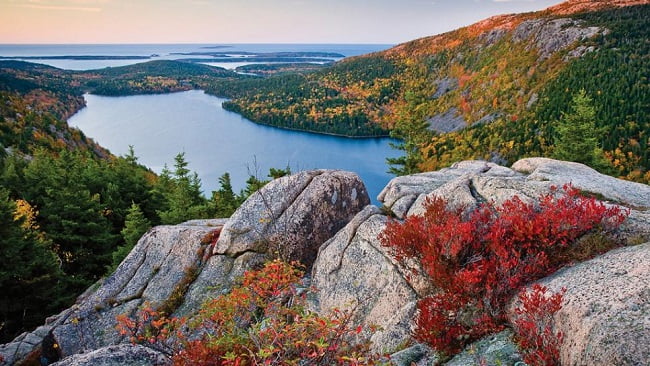
Arcadia National Park
(https://www.national-park.com)

Quotes:

"Our national parks are our breathing spaces."

"Our public lands - whether a national park or monument, wildlife refuge, forest or prairie - make each one of us land-rich. It is our inheritance as citizens of a country called America.” 

“This is what we can promise the future: a legacy of care. That we will be good stewards and not take too much or give back too little, that we will recognize wild nature for what it is, in all its magnificent and complex history - an unfathomable wealth that should be consciously saved, not ruthlessly spent.”

Reviews: 


Interviews: 


2. Experience Life Mag - Behind the Scenes with the author: 

https://www.youtube.com/watch?v=PJqJE36VTAI (**Be sure to watch this**)


>The National Parks Series by Ken Burns with Terry Tempest Williams introduction: https://www.youtube.com/watch?v=tUn4IuOHrRU


Vermillion Flycatcher (http://cdn.audubon.org/)

Author's Website: http://www.coyoteclan.com/


Effigy Mounds National Monument
(https://www.nationalparks.org)


Discussion Questions: (Heidi wrote these and will lead the discussion)
1.     Which national parks have you visited and what are some of your memories, from your visit, which make you ‘swoon’ as Maine does for our author?

2.     After reading this book, are there any parks that you want to visit more than ever now?

3.     Do you have ’place’?  A land or space that you feel tied to?

4.     To describe Wind Canyon’s terrain in Theodore Roosevelt National Park, she uses the verbs, “break, erode, collapse, slide . . .”  (p. 80) Which verbs would you use to describe Bucks County?

5.     Our author writes, “Again and again, we find the common story of the establishment of our national parks: a handful of people fall in love with a place, see it threatened, want to protect it for the future and have the passion and patience to attract the necessary fund and political clout to make it happen.” (p. 105) If you had the ability, time and money to protect and save a parcel of land, where would you choose, how small or large and why?

6.     There are numerous wonderful passages, poems and quotes in this book. One of my favorite is from Laurance Rockefeller: “ How we treat our land, how we build upon it, how we act toward our air and water, in the long run, will tell what kind of people we really are.” (p 28) What are some of your favorite quotes and why?

7.     What do you think of Roosevelt’s vision of “democracy of experience” having created the carriage roads in Arcadia? (p. 92)

8.     Williams’ writing style is beautiful, descriptive, visual, and poetic. She includes letters to friends, sections from her notebooks, and shares struggles with her family. How do you react to her style and does it enhance the stories she’s telling? Also, discuss her letters presented in the Canyonlands chapter. (p. 256)


9.     Our federal parks are not only places of beauty and rejuvenation, but also often used for extracting resources, as our author shares of the situation at Theodore Roosevelt National Park, Gulf Islands National Seashore, and Canyonlands National Park. She asks, “How might we begin a different kind of conversation so that our public lands are seen as our public commons, instead of the seedbed of rancor, violence and greed?” What can we do to protect and support our national parks? Consider pages 264, 271, 297, 308, 326.


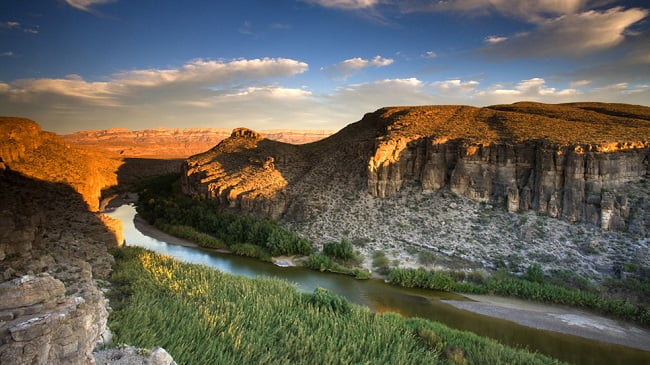
Big Bend National Park 
(https://www.national-park.com)


Koan Boxes 
(http://www.lawrencefodor.com/www.lawrencefodor.com/Koan_Boxes.html)