Showing posts with label biography. Show all posts

Sunday, July 31, 2022

Fox and I: An Uncommon Friendship by Catherine Raven


Summary: (Amazon) When Catherine Raven finished her PhD in biology, she built herself a tiny cottage on an isolated plot of land in Montana. She was as emotionally isolated as she was physically, but she viewed the house as a way station, a temporary rest stop where she could gather her nerves and fill out applications for what she hoped would be a real job that would help her fit into society. In the meantime, she taught remotely and led field classes in nearby Yellowstone National Park.

Then one day she realized that a mangy-looking fox was showing up on her property every afternoon at 4:15 p.m. She had never had a regular visitor before. How do you even talk to a fox? She brought out her camping chair, sat as close to him as she dared, and began reading to him from The Little Prince. Her scientific training had taught her not to anthropomorphize animals, yet as she grew to know him, his personality revealed itself and they became friends.

From the fox, Catherine learned the single most important thing about loneliness: we are never alone when we are connected to the natural world. Friends, however, cannot save each other from the uncontained forces of nature. 

Fox and I is a poignant and remarkable tale of friendship, growth, and coping with inevitable loss—and of how that loss can be transformed into meaning. It is both a timely tale of solitude and belonging as well as a timeless story of one woman whose immersion in the natural world will change the way we view our surroundings—each tree, weed, flower, stone, or fox.


(Washingtonpost.com)


Author's Websitehttps://www.catherineraven.com/;


Reviews:


NPR: https://www.npr.org/2021/07/08/1013302180/friendship-between-a-woman-and-a-fox-leads-to-transformation-in-fox-i


NY Times: https://www.nytimes.com/2021/07/06/books/review/fox-and-i-catherine-raven.html


Washington Post: https://www.washingtonpost.com/entertainment/books/fox-and-i-catherine-raven-book/2021/07/06/457c3320-de6a-11eb-9f54-7eee10b5fcd2_story.html


(csmonitor.com)

Videos:

Book Trailer: https://www.pw.org/content/fox_and_i


https://leslielindsay.com/2021/07/07/fox-and-i/


Interviews:


https://www.youtube.com/watch?v=R_EmhP_YwlY


American Book Association: https://www.bookweb.org/news/indies-introduce-qa-catherine-raven-1626081


Article by Author in National Geographic:


https://www.nationalgeographic.co.uk/travel/2021/12/notes-from-an-author-catherine-raven-on-finding-solace-in-the-wilderness-of-the-american-west


Discussion Questions: (Heidi will lead the discussion)


(wsj.org)


Monday, May 2, 2022

The Sakura Obsession by Naoko Abe


Summary: (Amazon) Collingwood Ingram—known as “Cherry” for his defining passion—was born in 1880 and lived until he was a hundred, witnessing a fraught century of conflict and change. Visiting Japan in 1902 and again in 1907, he fell in love with the country’s distinctive cherry blossoms, or sakura, and brought back hundreds of cuttings with him to England, where he created a garden of cherry varieties.

On a 1926 trip to Japan to search for new specimens, Ingram was shocked to find a dramatic decline in local cherry diversity. A cloned variety was taking over the landscape and becoming the symbol of Japan’s expansionist ambitions, while the rare and spectacular 
Taihaku, or “Great White Cherry,” had disappeared entirely.

But thousands of miles away, at Ingram’s country estate, the 
Taihaku still prospered. After returning to Britain, the amateur botanist buried a living cutting from his own collection into a potato and repatriated it to Japan via the Trans-Siberian Express. Over the decades that followed, Ingram became one of the world’s leading cherry experts and shared the joy of sakura both nationally and internationally, sending more than a hundred varieties of cherry tree to new homes around the globe, from Auckland, New Zealand to Washington, D.C.

As much a history of the cherry blossom in Japan as it is the story of one remarkable man, 
The Sakura Obsession follows the flower from its significance as a symbol of the imperial court, through the dark days of the Second World War, and up to the present-day worldwide fascination with this iconic blossom.

(WSJ)

Reviews:


Interview:

Discussion Questions:


(The Guardian)


Saturday, September 4, 2021

The Planter of Modern Life by Stephen Heyman


Summary (from book's website): "
Louis Bromfield was a World War I ambulance driver, a Paris expat, and a Pulitzer Prize–winning novelist as famous in the 1920s as Hemingway or Fitzgerald. But he cashed in his literary success to finance a wild agrarian dream in his native Ohio. The ideas he planted at his utopian experimental farm, Malabar, would inspire America’s first generation of organic farmers and popularize the tenets of environmentalism years before Rachel Carson’s Silent Spring.

A lanky Midwestern farm boy dressed up like a Left Bank bohemian, Bromfield stood out in literary Paris for his lavish hospitality and his green thumb. He built a magnificent garden outside the city where he entertained aristocrats, movie stars, flower breeders, and writers of all stripes. Gertrude Stein enjoyed his food, Edith Wharton admired his roses, Ernest Hemingway boiled with jealousy over his critical acclaim. Millions savored his novels, which were turned into Broadway plays and Hollywood blockbusters, yet Bromfield’s greatest passion was the soil.

In 1938, Bromfield returned to Ohio to transform 600 badly eroded acres into a thriving cooperative farm, which became a mecca for agricultural pioneers and a country retreat for celebrities like Humphrey Bogart and Lauren Bacall (who were married there in 1945).

This sweeping biography unearths a lost icon of American culture, a fascinating, hilarious and unclassifiable character who―between writing and plowing―also dabbled in global politics and high society. Through it all, he fought for an agriculture that would enrich the soil and protect the planet. While Bromfield’s name has faded into obscurity, his mission seems more critical today than ever before."

Reviews:

1. Kirkus Reviews: https://www.kirkusreviews.com/book-reviews/stephen-heyman/the-planter-of-modern-life/

2. Wall Street Journal: https://www.wsj.com/articles/the-planter-of-modern-life-review-raising-the-bar-11587133008


Website for the Book: https://www.theplanterofmodernlife.com/

Publisher Site: https://wwnorton.com/books/9781324001898

Malabar Farm Foundation: https://malabarfarm.org/

E.B White's Poem, "Malabar Farm", published in the New Yorker (1948):


. . . Strangers arriving by every train,

Bromfield terracing against the rain,

Catamounts crying, mowers mowing,

Guest rooms full to overflowing,

Boxers in every room of the house,

Cows being milked to Brahms and Strauss,

Kids arriving by van and pung,

Bromfield up to his eyes in dung,

Sailors, trumpeters, mystics, actors,

All of them wanting to drive the tractors,

All of them eager to husk the corn,

Some of them sipping their drinks till morn […]

Films:

1. The Rains Came (1939): https://www.youtube.com/watch?v=bkdQ95XEiY8

2. "The Land" Documentary (1942): https://www.youtube.com/watch?v=e-fAga_Yf10


(Malabar Farm: Ohiotraveler.com)

Interviews with Author:

1. National Endowment of the Humanities: https://www.neh.gov/blog/planter-modern-life-qa-stephen-heyman

2. Hudson Library: https://www.youtube.com/watch?v=sEAlxErPtA8

Discussion Questions:


(Louis Bromfield and the farm: richlandsource.com)


Friday, September 25, 2020

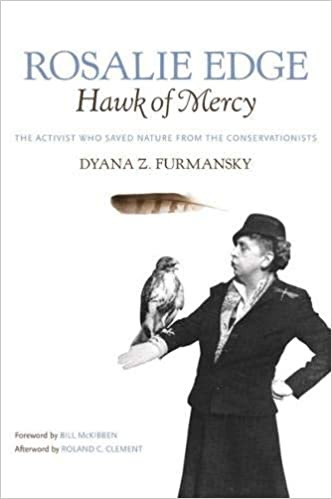
Rosalie Edge: Hawk of Mercy by Dyana Z.Furmansky

Summary (from Amazon): Rosalie Edge (1877-1962) was the first American woman to achieve national renown as a conservationist. Dyana Z. Furmansky draws on Edge’s personal papers and on interviews with family members and associates to portray an implacable, indomitable personality whose activism earned her the names “Joan of Arc” and “hellcat.” A progressive New York socialite and veteran suffragist, Edge did not join the conservation movement until her early fifties. Nonetheless, her legacy of achievements―called "widespread and monumental" by the New Yorker―forms a crucial link between the eras defined by John Muir and Rachel Carson. An early voice against the indiscriminate use of toxins and pesticides, Edge reported evidence about the dangers of DDT fourteen years before Carson's Silent Spring was published.

Today, Edge is most widely remembered for establishing Hawk Mountain Sanctuary, the world's first refuge for birds of prey. Founded in 1934 and located in eastern Pennsylvania, Hawk Mountain was cited in Silent Spring as an "especially significant" source of data. In 1930, Edge formed the militant Emergency Conservation Committee, which not only railed against the complacency of the Bureau of Biological Survey, Audubon Society, U.S. Forest Service, and other stewardship organizations but also exposed the complicity of some in the squandering of our natural heritage. Edge played key roles in the establishment of Olympic and Kings Canyon National Parks and the expansion of Yosemite and Sequoia National Parks. Filled with new insights into a tumultuous period in American conservation, this is the life story of an unforgettable individual whose work influenced the first generation of environmentalists, including the founders of the Wilderness Society, Nature Conservancy, and Environmental Defense Fund.

Reviews:

https://greengroundswell.com/rosalie-edge-hawk-of-mercy-book-review/2013/08/22/

(wikipedia)

Articles:

1. Audubon: https://www.audubon.org/news/unpacking-rosalie-edge-slowly-stories-hawk-mercy-doesnt-tell

2. Million Trees: https://milliontrees.me/2014/09/12/rosalie-edge-conservation-hero/

Archive Catalog of Bird Lore written by Frank Chapman for NAAShttps://catalog.hathitrust.org/Record/000497136

Pelican Island in Floridahttps://www.fws.gov/refuge/pelican_island/about/history.html

History of National Association of Audubon Societies (NAAS)https://www.audubon.org/about/history-audubon-and-waterbird-conservation

Videos and Interviews with Author:

1. By her daughter: https://www.youtube.com/watch?v=jk3DMgvquTI

2. U.S. Fish and Wildlife Service: https://www.facebook.com/watch/live/?v=300224014335245&ref=watch_permalink

3. Hawk Mountain: https://www.youtube.com/watch?v=iVHIXqJYanA

4. Wildlife Center in VA: https://www.wildlifecenter.org/episode-13-hawks-falcons

Hawk Mountain Sanctuary Website: https://www.hawkmountain.org/

Discussion Questions: 

1.  Discuss who Edge was and how she became a "citizen-scientist and militant political agitator".  What events influenced and "awakened"her?  Discuss her travels, writings, involvement with the suffragette movement, social life, marriage, children, etc.

2.  Discuss the origins and evolution of The National Association of Audubon Societies (NAAS) organization, "the nation's oldest, largest, wealthiest and most prestigious bird protection organization", including its early leaders such as Grinnell, Chapman, and Pearson.  Discuss NAAS' relationship with the AOU (American Ornithological Society), the American Museum of Natural History and Bureau of Biological Survey as well as the Winchester Arms Co. and the Vermilion Bay Hunt Club and the conflicts that ensured.  (p. 98-)

3.  What does "conservation" mean to you?  What does the term "sentimentalist" mean?  What does "preservationist" mean?

4.  In 1929, Edge received a package in Paris containing the pamphlet, "A Crisis in Conservation".  Discuss why it was written, what event provoked it to be written and who were the writers.  What impact did it have on Edge?  (p.88-, 106-)

5.  Discuss Edge's relationship and interactions with the NAAS Board including her writings and the various people she worked with including Hornaday, Van Name and Brant and even Peterson and how it led to her founding the ECC (Emergency Conservation Committee).  (p. 110-, 118-, 124)

6.  Why does Edge hire the cofounder and director of the ACLU, Roger Baldwin, to represent her in a lawsuit against the NAAS?  What is the result and impact?  (126-) Discuss further major events that she fought against including the Rentals of Sanctuary in the NAAS budget, (p. 138), Yellowstone's pelicans (p. 141), fur trapping, Bear Refuge (p. 140), and King's Canyon (p. 228-), etc.

7.  The term ecosystem was not readily used in the early 1900s but Edge evokes this concept at NAAS meetings and congressional hearings.  (p. 143-) What impact and vision did it provide?

8.  Edge kept her activist and social lives separate.  At the Colony Club though, she was once asked, "What do you do when you look at a bird?"  (p. 150)  How would you respond?

9.  Discuss Edge's creativity, advocacy work, and navigation of numerous relationships (Van Name, Secretary Ickes, Brant, Superintendent Thompson, etc.) from creating the Hawk Mountain Sanctuary to helping create the Olympic National Park and also saving the Yosemite Sugar Pines.

10.  What impact did Edge have on the conservation movement as a whole and which organizations and individuals continued the fight, who were inspired by her?


(Audubon.org)


Friday, March 24, 2017

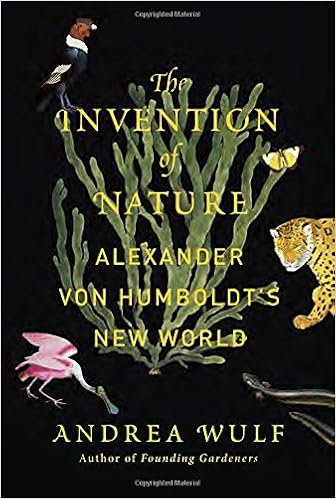
The Invention of Nature by Andrea Wulf


Summary from Amazon:
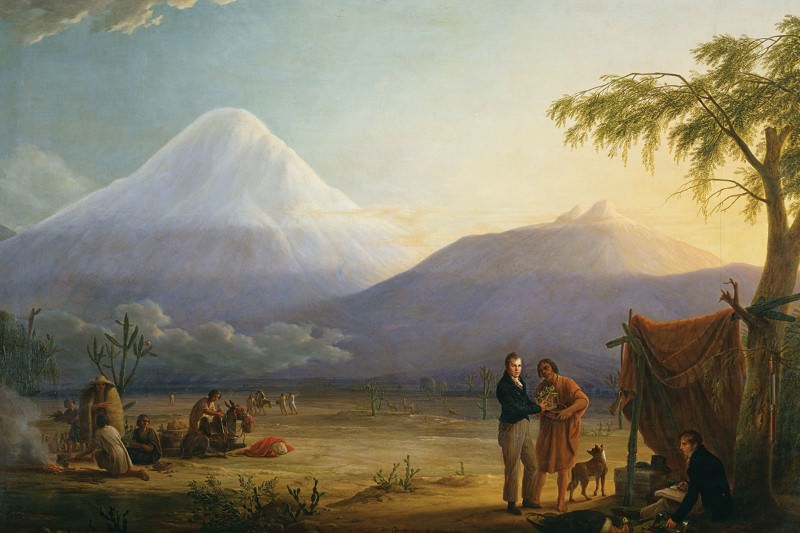
"Alexander von Humboldt (1769–1859) was an intrepid explorer and the most famous scientist of his age. In North America, his name still graces four counties, thirteen towns, a river, parks, bays, lakes, and mountains. His restless life was packed with adventure and discovery, whether he was climbing the highest volcanoes in the world or racing through anthrax-infected Siberia or translating his research into bestselling publications that changed science and thinking. Among Humboldt’s most revolutionary ideas was a radical vision of nature, that it is a complex and interconnected global force that does not exist for the use of humankind alone. 

Now Andrea Wulf brings the man and his achievements back into focus: his daring expeditions and investigation of wild environments around the world and his discoveries of similarities between climate and vegetation zones on different continents. She also discusses his prediction of human-induced climate change, his remarkable ability to fashion poetic narrative out of scientific observation, and his relationships with iconic figures such as Simón Bolívar and Thomas Jefferson. Wulf examines how Humboldt’s writings inspired other naturalists and poets such as Darwin, Wordsworth, and Goethe, and she makes the compelling case that it was Humboldt’s influence that led John Muir to his ideas of natural preservation and that shaped Thoreau’s Walden.

With this brilliantly researched and compellingly written book, Andrea Wulf shows the myriad fundamental ways in which Humboldt created our understanding of the natural world, and she champions a renewed interest in this vital and lost player in environmental history and science."

Reviews:
NY Times Review: https://www.nytimes.com/2015/09/27/books/review/the-invention-of-nature-by-andrea-wulf.html

Boston Globe: https://www.bostonglobe.com/arts/books/2015/10/03/book-review-the-invention-nature-alexander-von-humboldt-new-world-andrea-wulf/13dl6jtIkrrkkahAWtjvkI/story.html

Interviews:
On Vimeo: https://vimeo.com/93417125

Interview with ZDF,  in German: https://www.zdf.de/gesellschaft/precht/precht-168.html

At Yale:
http://e360.yale.edu/features/legacy_of_the_man_who_change_our_view_of_nature_alexander_von_humboldt_andrea_wulf

RadioWest Interview: http://radiowest.kuer.org/post/invention-nature-0


Author's Sitehttp://www.andreawulf.com/about-the-invention-of-nature.html

Awards: One of the New York Times 10 Best Books of the Year

Winner of the Los Angeles Times Book Prize, The James Wright Award for Nature Writing, the Costa Biography Award, the Royal Geographic Society's Ness Award, the Sigurd F. Olson Nature Writing Award

Finalist for the Andrew Carnegie Medal for Excellence in Nonfiction, the Kirkus Prize Prize for Nonfiction, the Independent Bookshop Week Book Award


A Best Book of the Year: The New York Times, The Atlantic, The EconomistNatureJezebelKirkus ReviewsPublishers WeeklyNew ScientistThe IndependentThe TelegraphThe Sunday Times, The Evening Standard, The Spectator


Bucks County Audubon Society Event: Earth Day, April 22 from 11:00 - 4:00
To celebrate the birth of the modern environmental movement, we are reading this book about one of the very first environmentalist. Join us at Bucks County Audubon Society at Honey Hollow, located only a few minutes from Peddler's Village, to celebrate with this special event. We will have lots of vendors, exhibits, presentations, etc. Visit the website for more information: http://www.bcas.org/event/earth-day-festival/.


Discussion Questions (by Heidi and John, who will be leading the discussion):

1. How did Humboldt go from being the most celebrated scientist of the nineteenth century to being largely unknown in our time?  What did you know about Humboldt before reading this book? 
2. What are some of the concepts of the times, that greatly influenced Humboldt’s thinking, such as Kant’s concept of a systematic construct and Goethe’s ideas and belief of the marriage of art and science.
3. How did Humboldt expand on his concept of “Nature must be experienced through feeling,”? How does he develop this further? Is this inconsistent with scientific practice?
4. From the beginning of time, it was believed that humans had command over nature, as stated in the Bible, to Aristotle and on into the 17th century with Francis Bacon declaring “the world is made for man” and Descartes wrote that humans were “the lords and possessors of nature.” Many believed, that all the land should be cultivated and “improved” and tidy. These ideas are prevalent in our own society again today. What causes this disconnect with nature and man?
5.  Describe some of his exciting travels and dangerous moments?
6. What are some of the negative impacts humans were having on the environment already at that time, that Humboldt observed and were concerned about, i.e  Lake Valencia, deforestation, climate change, animal populations such as the turtles from the Orinoco rainforest.
7.  How was Humboldt’s view of nature and Earth radically different from previously?  What experiences in particular helped him develop his ideas? 
8.  Who were some of the great people, notably coming from many different disciplines, that were influenced by Humboldt and what were some of his ideas, that became seeds of new concepts that they later developed?  
9.  One of his greatest achievements was his book, Cosmos.  Did this book inspire Carl Sagan’s book Cosmos?
10.  Describe the process by which he created networks of scientists and the incredible number of letters he wrote and received during his career to forge these associations.