Showing posts with label birding. Show all posts

Monday, November 23, 2020

The Home Place: Memoirs of a Colored Man's Love Affair with Nature by J. Drew Lanham


Summary (Amazon): From the fertile soils of love, land, identity, family, and race emerges The Home Place, a big-hearted, unforgettable memoir by ornithologist J. Drew Lanham.

Dating back to slavery, Edgefield County, South Carolina―a place “easy to pass by on the way somewhere else”―has been home to generations of Lanhams. In The Home Place, readers meet these extraordinary people, including Drew himself, who over the course of the 1970s falls in love with the natural world around him. As his passion takes flight, however, he begins to ask what it means to be “the rare bird, the oddity.”

By turns angry, funny, elegiac, and heartbreaking, The Home Place is a remarkable meditation on nature and belonging, at once a deeply moving memoir and riveting exploration of the contradictions of black identity in the rural South―and in America today.

(ebird)
Reviews:

1. Los Angeles: http://losangelesreview.org/book-review-the-home-place-memoirs-of-a-colored-mans-love-affair-with-nature-by-drew-lanham/

2. Kirkus Reviews: https://www.kirkusreviews.com/book-reviews/j-drew-lanham/the-home-place-memoirs/


Author's Website and Twitterhttps://www.clemson.edu/cafls/faculty_staff/profiles/lanhamjhttps://twitter.com/1blackbirder?ref_src=twsrc%5Egoogle%7Ctwcamp%5Eserp%7Ctwgr%5Eauthor

Edgefield, SC (farmflip.com)
Interviews and Speeches:

1. American Bird Association: https://www.aba.org/lanham-interview/

2. Black Market Treads: https://blackmarketreads.com/2020/01/02/j-drew-lanham/

3. Clemson University: https://www.youtube.com/watch?v=A4rsVy5PSwI

4. Keynote Speech at National Audubon Convention in 2017: https://www.audubon.org/news/listen-drew-lanhams-keynote-speech-2017-audubon-convention-utah

Audubon's Equity, Diversity and Inclusion: 

1. Bucks County Audubon Society's Task Force on Equity, Diversity and Inclusion: https://www.bcas.org/about-us/diversity-inclusion/

2. National Audubon's Equity, Diversity and Inclusion Site: https://www.audubon.org/about/edi

3. Politico Article: https://www.politico.com/news/2020/11/12/audubon-society-claims-intimidation-threats-436215


Discussion Guide from Longwood Gardens: https://longwoodgardens.org/sites/default/files/wysiwyg/TheHomePlace_DiscussionGuide.pdf

Discussion Questions: (Several of these questions were used or inspired from Longwood Garden's Discussion Guide listed above. Heidi will be leading the discussion.)


Monday, June 1, 2020

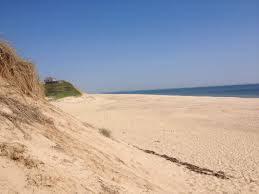
2 Books: The Outermost House by H. Beston and The Outer Beach by R. Finch


Summary of The Outermost House (Amazon):

A chronicle of a solitary year spent on a Cape Cod beach, The Outermost House has long been recognized as a classic of American nature writing. Henry Beston had originally planned to spend just two weeks in his seaside home, but was so possessed by the mysterious beauty of his surroundings that he found he "could not go."
Instead, he sat down to try and capture in words the wonders of the magical landscape he found himself in thrall to: the migrations of seabirds, the rhythms of the tide, the windblown dunes, and the scatter of stars in the changing summer sky. Beston argued that, "The world today is sick to its thin blood for the lack of elemental things, for fire before the hands, for water, for air, for the dear earth itself underfoot." Seventy-five years after they were first published, Beston's words are more true than ever.


Reviews: 


Videos:
a. Summary of the book and its impact: https://www.youtube.com/watch?v=lGk6aBXM_os

b. Outermost House History Walk: https://www.youtube.com/watch?v=TuCO9bGuAN8

c. Don Wilding Presentation: https://www.youtube.com/watch?v=JR3hqBcHfnM


(NY Times)

Life Span of Animals

Cape Cod Birds (blog): https://capecodbirds.org/


(Cape Cod Times)


Summary of The Outer Beach (Amazon):
In a collection of essays, "Finch pays tribute to the Outer Beach’s impressive literary legacy, meditates on its often-tragic history, and explores the strange, mutable nature of time near the ocean. But lurking behind every experience and observation―both pivotal and quotidian―is the essential question that the beach beckons every one of its pilgrims to confront: How do we accept our brief existence here, caught between overwhelming beauty and merciless indifference?"

Reviews:
NYTimes: https://www.nytimes.com/2017/06/02/books/review/outer-beach-thousand-mile-walk-cape-cod-robert-finch.html

CS Monitor: https://www.csmonitor.com/Books/Book-Reviews/2017/0608/The-Outer-Beach-captures-the-sense-of-enchantment-found-on-Cape-Cod

(Montclair shipwreck exposed in 2017)


WCAI- NPR: Cape and the Islands: Essays by Robert Finch: https://www.capeandislands.org/people/robert-finch#stream/0https://www.capeandislands.org/post/sands-monomoy#stream/0

Video: https://vimeo.com/226825238

(Weneedavacation.com)

A Cape Cod Notebook: https://www.capeandislands.org/people/robert-finch#stream/0

Visiting Cape Cod:
1. https://www.visitcapecod.com/
2. https://www.travelandleisure.com/travel-guide/cape-cod
3. https://www.massvacation.com/regions-towns/cape-cod-the-islands/
4. https://www.planetware.com/tourist-attractions-/massachusetts-cape-cod-us-ma-ccod.htm
5. https://www.weneedavacation.com/Cape-Cod/Outer-Cape-Cod-info/

Visiting Cape Cod Virtuallyhttps://www.capecodchamber.org/things-to-do/virtual-experiences/

Relationship between Beston and Finch and documentary film:
http://blogs.capecodonline.com/cape-cod-henry-beston/2014/04/25/finch-interviewed-for-beston-film/

Discussion Questions (Heidi will be leading the discussion):
1.     Have you ever visited Cape Cod?  If yes, which beaches did you visit? What time of year was your visit? What did you see?

2.    As Beston’s daughter states in an interview about her father’s writing, “he was a slow and painstaking writer, revising and polishing every sentence, every turn of phrase --- sometimes taking an entire morning to complete one sentence”. How did you find his writing? Do you have any favorite passages?

3.    How do the authors compare in their observations, descriptions, focus, writing styles? Reflect on the quotes included at the beginning of Finch’s book.

4.    Finch evokes several authors, Thoreau, Richardson and but especially Beston (pp 59, 90, 105, 112, 126, 128, 131, 132, 139, etc.) How does he incorporate these other writings into his book? What was his relationship with Beston?

5.     How does Beston’s description of the beach compare to your own thoughts about the beach? Did Beston’s writing bring you to see it in a new light? How about Finch?

6.     During winter and now the pandemic, how do you spend your time? How did Beston?

7.     Both authors discuss often what one finds along the beach, during the night, after a storm, etc. What items have you found over the years? Which ones did you find interesting from the books? Shipwrecks, wreckage, phosphorescence, dogfish, wooden stones, etc. (Beston: pp 57, 122, 178; Finch, pp 61, 89-91, etc. )

8.     Discuss the many animals that both authors encounter on the outer beach, from birds, to skunk, skates, eel, etc.

9.     Discuss the origins and specially the everchanging landscape of the Outerbeach including intense erosion, every moving shoals, emersion of springs, cliftes, etc.  that both authors speak at length about. What are you seeing at the beaches you visit?


Monday, May 27, 2019

John James Audubon: The Making of An American by Richard Rhodes


Summary (Amazon):
John James Audubon came to America as a dapper eighteen-year-old eager to make his fortune. He had a talent for drawing and an interest in birds, and he would spend the next thirty-five years traveling to the remotest regions of his new country–often alone and on foot–to render his avian subjects on paper. The works of art he created gave the world its idea of America. They gave America its idea of itself. 

Here Richard Rhodes vividly depicts Audubon’s life and career: his epic wanderings; his quest to portray birds in a lifelike way; his long, anguished separations from his adored wife; his ambivalent witness to the vanishing of the wilderness. John James Audubon: The Making of an American is a magnificent achievement.


Reviews:
The New York Times: https://www.nytimes.com/2004/10/31/books/review/john-james-audubon-the-birdman-of-america.html

The Economist: Birds on a Wire: https://www.economist.com/books-and-arts/2004/08/05/birds-on-a-wire
(wikipedia)


Penguin Book's Site for book:https://www.penguinrandomhouse.com/books/141605/john-james-audubon-by-richard-rhodes/9780375713934/

Videos and Films:
John James Audubon: The Birds of America: https://www.youtube.com/watch?v=yQijoWmzvTo

PBS: The Masters: Drawn from Naturehttp://www.pbs.org/wnet/americanmasters/john-james-audubon-drawn-from-nature/106/

Audubon: The Filmhttp://www.audubonthefilm.com/


(Audubon.org)

John James Audubon Center at Mill Grove - new center open and with an Exhibit of his work: http://johnjames.audubon.org/https://www.audubon.org/birds-of-america?site=johnjames&nid=4131

National Audubon Societyhttps://www.audubon.org/

Local Chapter: Bucks County Audubon Society at Honey Hollow Environmental Centerhttps://www.bcas.org/

Interesting Articles:
So big it needs its own furniture: http://mentalfloss.com/article/520325/audubons-birds-america-book-so-big-it-needed-its-own-furniture

Going for $10 million: https://www.theguardian.com/books/2012/jan/06/most-expensive-book-birds-of-america-10m

Our Namesake and Inspiration: https://www.audubon.org/content/john-james-audubon

ROAD TRIPS: 
New York Historical Society: https://www.nyhistory.org/explore/john-james-audubon

On Display in Chicago at the Field Museum from now until Dec. 1, 2019:
https://blockclubchicago.org/2019/04/24/rare-audubon-book-showing-north-americas-birds-now-on-display-at-field-museum/

E-notes: https://www.enotes.com/topics/john-james-audubon-richard-rhodes

Discussion Questions: (Heidi will be leading)
1. Discuss and describe who Audubon was, his complicated background, talents, appearance, family life, bird collecting, extensive travels, successes and failures. See pp: 4, 11, 18, 21-, 95, 114-, 124-, 230, 233, 253, 298, 329, 341, 418-, 432

2. The early 1800s were a fascinating and challenging time period with the expansion into the west, the development of the steam engine, Louisiana Purchase, the War of 1812, July Revolution of 1830, Industrial Revolution, passage over the Atlantic, disease, etc. Discuss how these impacted Audubon and affected his life. See pp: 21, 121, 132, 136, 338, 343-

3. The Panic of 1819 was the first major economic crisis and depression in America and had a profound affect on Audubon’s life. Discuss these impacts including the loss of his business, his marriage and family life, relationships, his mental health and work. How does the 2nd crisis affect him in 1837? See pp: 138- , 249, 400.

4. In 1816 was the year without a summer and communities turned to nature to survive. Discuss the story about the Passenger pigeons, which are now extinct, but were plentiful during this period.  See pages: 112, 127-130. Discuss other destruction of the environment, that he sees during his life. See pp. 337, 384

5. Audubon was a colorful character and had many adventures, including pirates, quicksand, earthquakes, fights, traveling the wild Mississippi, a mysterious naked woman, years apart from this family, alligators in FL, etc. Discuss these and see pages: 85, 96, 116, 140, 169, 180, 302, 361-

6. There were many fascinating men and women who lived and achieved greatness during these times, including Mary Shelley, Humboldt, Darwin, Bartram, Peale, etc. Discuss who he met and was greatly influenced and impacted by, including Alex Wilson, Charles Bonaparte, Berthoud, Syme, Nuttall, Vanderlyn, Bachman, Thomas Sully, Sir Walter Scott, Henry Clay, Rathbones, Andrew Jackson, President Houston, etc. See pp: 144, 150, 166-167, 186, 215, 219-221, 224, 252-, 276, 283-285, 305-, 352, 396-

7. Creatures were still being discovered, collected and named. Discuss and can you identify some of the different names used for the birds and animals we know today, including: mosquito hawks, tufted ducks, black bellied darters, swallow tailed hawk, white headed eagle, great footed hawk, carrion crows, red breasted thrushes, etc. See pages: 158, 178.


8. Discuss Audubon’s painting and his processes which evolved over the years and the challenges from destructive wood rats to losing them, watercolors and oils, finding time and money to realize his dream as well as the men who handled his engravings (Lizars and Havell) and how he sold and developed his famous work, The Birds of America. See pp: 116, 163, 169, 210, 217, 261, 273, 285, 293-294, 299-304, 341, 345-, 403-

(Audubon.org)


Monday, November 28, 2016

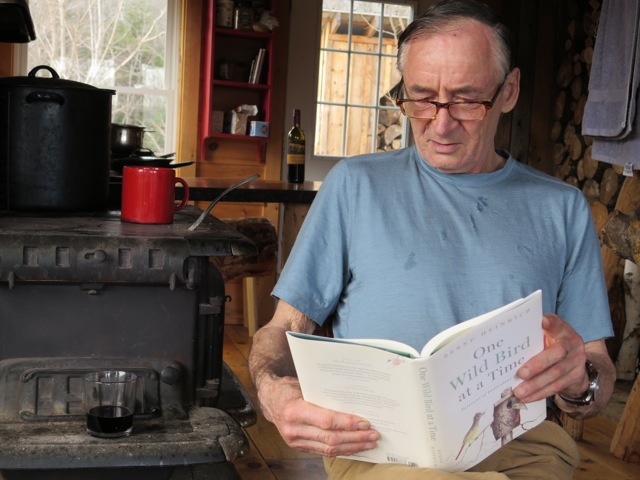
One Wild Bird at a Time by Bernd Heinrich


Summary from Amazon:
"In One Wild Bird at a Time, Heinrich returns to his great love: close, day-to-day observations of individual wild birds. There are countless books on bird behavior, but Heinrich argues that some of the most amazing bird behaviors fall below the radar of what most birds do in aggregate. Heinrich’s “passionate observations [that] superbly mix memoir and science” (New York Times Book Review) lead to fascinating questions — and sometimes startling discoveries. A great crested flycatcher, while bringing food to the young in their nest, is attacked by the other flycatcher nearby. Why? A pair of Northern flickers hammering their nest-hole into the side of Heinrich’s cabin deliver the opportunity to observe the feeding competition between siblings, and to make a related discovery about nest-cleaning. One of a clutch of redstart warbler babies fledges out of the nest from twenty feet above the ground, and lands on the grass below. It can’t fly. What will happen next?"

Quote: "Each animal gives us a new view, a new experience, that involves stepping out of our own world into another, and it is always an adventure.


(http://cdn.phys.org/newman/gfx/news/2016/peeringintot.jpg)

Reviews:
Kirkus Review: https://www.kirkusreviews.com/book-reviews/bernd-heinrich/one-wild-bird-at-a-time/

WSJ: "Minding the Nest": http://www.wsj.com/articles/minding-the-nest-1463164185

The Naturalist's Notebook: The story behind the book, written by Heinrich:
http://www.thenaturalistsnotebook.com/one-wild-bird-at-a-time/

Interviews:
Q & A with the Author:http://www.thenaturalistsnotebook.com/our-blog/q-and-a-with-bernd-heinrich-about-his-new-book-one-wild-bird-at-a-time

Other books by Bernd Heinrich: Winter World, Summer World, One Man's Owl, Mind of the Raven, Why We Run, The Trees in my Forest, Life Everlasting

Discussion Questions:
1. Do you bird watch? If yes, Where? When? What?
2. Have you ever participated in a bird walk or birding class?
3. Which bird species, presented in this book, are familiar ones to you? New ones?
4. Bernd presents chapter after chapter of amazing observations, confirmations of old findings and makes new exciting discoveries. What are some of his observations of birds that surprised you?
5. Have you observed or witnessed yourself, some of the findings that Bernd presents here in this book, such as mobbing, courting, communication, nesting behaviors, sharing, survival strategies, snow diving or denning, flock learning, mourning, etc.?
6. Bernd intervenes, even interferes with several birds' lives, such as with Pipsqueak, “So, I went to find him, extracted him from the thicket and carried him to the cabin . . .” (p. 14-15) or with Slick, “On his next landing I closed my fingers, trying to grab him by his legs, and managed to snag him by a toe.” (p. 28).  What are your thoughts about this? Have you ever stepped in to help a bird or animal yourself?
7. Bernd uses a bird feeder and provides seeds for the birds in his area. “Nowadays the chickadees often seem to live on black sunflower seeds. A crowd of them at my bird feeder in Vermont had consumed over a hundred pounds of the seeds per winter . . .” (p. 108) Do you use a bird feeder? How often and how much do you feed them?  Do you use specific kinds of seeds to attract certain species?
8. In considering Pough’s statement , “If enough winter bird-feeding stations are established to free the evening grosbeak from dependence on natural foods its population might increase greatly in years to come.” (p. 178) What are your thoughts regarding using a bird feeder? What are the pros and cons?

9. Bernd’s writing is very fluid and accessible. Do you track your own observations of birds and animals you see? If yes, feel free to bring your journal along to share. What have you seen, that bewildered or excited you?

Bernd Heinrich in his cabin in Maine. 
Photo from Naturalist Notebook.

A video of an amazing talking starling.

American Woodcock Dance

Burrowing Owls Video

This is a photo from our first meeting. We look forward to more
interesting and fun books and discussions.