Showing posts with label birds. Show all posts

Wednesday, August 2, 2023

Conversations with Birds by P. Kumar


Summary (Milkweed Editions): “Birds are my almanac. They tune me into the seasons, and into myself.”

So begins this lively collection of essays by acclaimed filmmaker and novelist Priyanka Kumar. Growing up at the feet of the Himalayas in northern India, Kumar took for granted her immersion in a lush natural world. After moving to North America as a teenager, she found herself increasingly distanced from more than human life and discouraged by the civilization she saw contributing to its destruction. It was only in her twenties, living in Los Angeles and working on films, that she began to rediscover her place in the landscape—and in the cosmos—by way of watching birds.

Tracing her movements across the American West, this stirring collection of essays brings the avian world richly to life. Kumar’s perspective is not that of a list keeper, counting and cataloguing species. Rather, from the mango-colored western tanager that rescues her from a bout of altitude sickness in Sequoia National Park to ancient sandhill cranes in the Bosque del Apache National Wildlife Refuge, and from the snowy plovers building shallow nests with bits of shell and grass to the white-breasted nuthatch that regularly visits the apricot tree behind her family’s casita in Santa Fe, for Kumar, birds “become a portal to a more vivid, enchanted world.”

At a time when climate change, habitat loss, and the reckless use of pesticides are causing widespread extinction of species, Kumar’s reflections on these messengers from our distant past and harbingers of our future offer luminous evidence of her suggestion that “seeds of transformation lie dormant in all of our hearts. Sometimes it just takes the right bird to awaken us.”

Reviews: 

Kirkus Review: https://www.kirkusreviews.com/book-reviews/priyanka-kumar/conversations-with-birds/

Publisher Sitehttps://milkweed.org/book/conversations-with-birds

(Amazon)

Interviews:

1. Utah Public Radio: https://www.upr.org/show/access-utah/2022-10-18/conversations-with-birds-with-priyanka-kumar-on-tuesdays-access-utah

2. North Carolina Wildlife Federation: https://www.youtube.com/watch?v=TQeut7EsMac

3. Shondaland: https://www.shondaland.com/inspire/books/a41925066/conversations-with-birds-priyanka-kumar/

Author's Movies and Shows: 

The Song of the Little Roadhttps://www.youtube.com/watch?v=Yy3e_lzBI9Y

Kaatrukkenna Velihttps://www.hotstar.com/in/tv/kaatrukkenna-veli/1260051971/list/episodes/t-1_2_3195

Discussion Questions: (Heidi to lead):

(Western Tanager - ebird)


Saturday, March 26, 2022

The Bird Way by Jennifer Ackerman


Summary: “There is the mammal way and there is the bird way.” But the bird way is much more than a unique pattern of brain wiring, and lately, scientists have taken a new look at bird behaviors they have, for years, dismissed as anomalies or mysteries –– What they are finding is upending the traditional view of how birds conduct their lives, how they communicate, forage, court, breed, survive. They are also revealing the remarkable intelligence underlying these activities, abilities we once considered uniquely our own: deception, manipulation, cheating, kidnapping, infanticide, but also ingenious communication between species, cooperation, collaboration, altruism, culture, and play.

Some of these extraordinary behaviors are biological conundrums that seem to push the edges of, well, birdness: a mother bird that kills her own infant sons, and another that selflessly tends to the young of other birds as if they were her own; a bird that collaborates in an extraordinary way with one species—ours—but parasitizes another in gruesome fashion; birds that give gifts and birds that steal; birds that dance or drum, that paint their creations or paint themselves; birds that build walls of sound to keep out intruders and birds that summon playmates with a special call—and may hold the secret to our own penchant for playfulness and the evolution of laughter.

Drawing on personal observations, the latest science, and her bird-related travel around the world, from the tropical rainforests of eastern Australia and the remote woodlands of northern Japan, to the rolling hills of lower Austria and the islands of Alaska’s Kachemak Bay, Jennifer Ackerman shows there is clearly no single bird way of being. In every respect, in plumage, form, song, flight, lifestyle, niche, and behavior, birds vary. It is what we love about them. As E.O Wilson once said, when you have seen one bird, you have not seen them all.


(birdlife.org)

Reviews:


Videos and Interviews:

Videos:

Discussion Questions:


Monday, May 27, 2019

John James Audubon: The Making of An American by Richard Rhodes


Summary (Amazon):
John James Audubon came to America as a dapper eighteen-year-old eager to make his fortune. He had a talent for drawing and an interest in birds, and he would spend the next thirty-five years traveling to the remotest regions of his new country–often alone and on foot–to render his avian subjects on paper. The works of art he created gave the world its idea of America. They gave America its idea of itself. 

Here Richard Rhodes vividly depicts Audubon’s life and career: his epic wanderings; his quest to portray birds in a lifelike way; his long, anguished separations from his adored wife; his ambivalent witness to the vanishing of the wilderness. John James Audubon: The Making of an American is a magnificent achievement.


Reviews:
The New York Times: https://www.nytimes.com/2004/10/31/books/review/john-james-audubon-the-birdman-of-america.html

The Economist: Birds on a Wire: https://www.economist.com/books-and-arts/2004/08/05/birds-on-a-wire
(wikipedia)


Penguin Book's Site for book:https://www.penguinrandomhouse.com/books/141605/john-james-audubon-by-richard-rhodes/9780375713934/

Videos and Films:
John James Audubon: The Birds of America: https://www.youtube.com/watch?v=yQijoWmzvTo

PBS: The Masters: Drawn from Naturehttp://www.pbs.org/wnet/americanmasters/john-james-audubon-drawn-from-nature/106/

Audubon: The Filmhttp://www.audubonthefilm.com/


(Audubon.org)

John James Audubon Center at Mill Grove - new center open and with an Exhibit of his work: http://johnjames.audubon.org/https://www.audubon.org/birds-of-america?site=johnjames&nid=4131

National Audubon Societyhttps://www.audubon.org/

Local Chapter: Bucks County Audubon Society at Honey Hollow Environmental Centerhttps://www.bcas.org/

Interesting Articles:
So big it needs its own furniture: http://mentalfloss.com/article/520325/audubons-birds-america-book-so-big-it-needed-its-own-furniture

Going for $10 million: https://www.theguardian.com/books/2012/jan/06/most-expensive-book-birds-of-america-10m

Our Namesake and Inspiration: https://www.audubon.org/content/john-james-audubon

ROAD TRIPS: 
New York Historical Society: https://www.nyhistory.org/explore/john-james-audubon

On Display in Chicago at the Field Museum from now until Dec. 1, 2019:
https://blockclubchicago.org/2019/04/24/rare-audubon-book-showing-north-americas-birds-now-on-display-at-field-museum/

E-notes: https://www.enotes.com/topics/john-james-audubon-richard-rhodes

Discussion Questions: (Heidi will be leading)
1. Discuss and describe who Audubon was, his complicated background, talents, appearance, family life, bird collecting, extensive travels, successes and failures. See pp: 4, 11, 18, 21-, 95, 114-, 124-, 230, 233, 253, 298, 329, 341, 418-, 432

2. The early 1800s were a fascinating and challenging time period with the expansion into the west, the development of the steam engine, Louisiana Purchase, the War of 1812, July Revolution of 1830, Industrial Revolution, passage over the Atlantic, disease, etc. Discuss how these impacted Audubon and affected his life. See pp: 21, 121, 132, 136, 338, 343-

3. The Panic of 1819 was the first major economic crisis and depression in America and had a profound affect on Audubon’s life. Discuss these impacts including the loss of his business, his marriage and family life, relationships, his mental health and work. How does the 2nd crisis affect him in 1837? See pp: 138- , 249, 400.

4. In 1816 was the year without a summer and communities turned to nature to survive. Discuss the story about the Passenger pigeons, which are now extinct, but were plentiful during this period.  See pages: 112, 127-130. Discuss other destruction of the environment, that he sees during his life. See pp. 337, 384

5. Audubon was a colorful character and had many adventures, including pirates, quicksand, earthquakes, fights, traveling the wild Mississippi, a mysterious naked woman, years apart from this family, alligators in FL, etc. Discuss these and see pages: 85, 96, 116, 140, 169, 180, 302, 361-

6. There were many fascinating men and women who lived and achieved greatness during these times, including Mary Shelley, Humboldt, Darwin, Bartram, Peale, etc. Discuss who he met and was greatly influenced and impacted by, including Alex Wilson, Charles Bonaparte, Berthoud, Syme, Nuttall, Vanderlyn, Bachman, Thomas Sully, Sir Walter Scott, Henry Clay, Rathbones, Andrew Jackson, President Houston, etc. See pp: 144, 150, 166-167, 186, 215, 219-221, 224, 252-, 276, 283-285, 305-, 352, 396-

7. Creatures were still being discovered, collected and named. Discuss and can you identify some of the different names used for the birds and animals we know today, including: mosquito hawks, tufted ducks, black bellied darters, swallow tailed hawk, white headed eagle, great footed hawk, carrion crows, red breasted thrushes, etc. See pages: 158, 178.


8. Discuss Audubon’s painting and his processes which evolved over the years and the challenges from destructive wood rats to losing them, watercolors and oils, finding time and money to realize his dream as well as the men who handled his engravings (Lizars and Havell) and how he sold and developed his famous work, The Birds of America. See pp: 116, 163, 169, 210, 217, 261, 273, 285, 293-294, 299-304, 341, 345-, 403-

(Audubon.org)


Monday, May 1, 2017

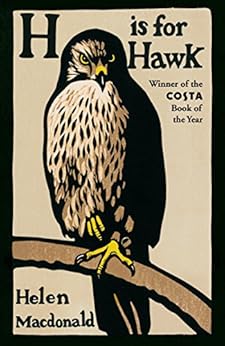
H is for Hawk by Helen Macdonald


Summary from Amazon:
The instant New York Times bestseller and award-winning sensation, Helen Macdonald's story of adopting and raising one of nature's most vicious predators has soared into the hearts of millions of readers worldwide. Fierce and feral, her goshawk Mabel's temperament mirrors Helen's own state of grief after her father's death, and together raptor and human "discover the pain and beauty of being alive" (People). H Is for Hawk is a genre-defying debut from one of our most unique and transcendent voices.


Awards:
One of the New York Times Book Review's 10 Best Books of the Year

ON MORE THAN 25 BEST BOOKS OF THE YEAR LISTS: including TIME (#1 Nonfiction Book), NPR, O, The Oprah Magazine (10 Favorite Books), Vogue (Top 10), Vanity Fair, Washington Post, Boston Globe, Chicago Tribune, Seattle Times, San Francisco Chronicle (Top 10), Miami Herald, St. Louis Post Dispatch, Minneapolis Star Tribune (Top 10), Library Journal (Top 10), Publishers Weekly, Kirkus Reviews, Slate, Shelf Awareness, Book Riot, Amazon (Top 20)


Reviews:
New York Times: https://www.nytimes.com/2015/02/22/books/review/helen-macdonalds-h-is-for-hawk.html?_r=0

New Yorker: http://www.newyorker.com/magazine/2015/03/09/rapt

All About Birds Review: https://www.allaboutbirds.org/a-falconer-reviews-helen-macdonalds-acclaimed-bestseller-h-is-for-hawk/

Publisher, Grove Atlantic Website: http://www.groveatlantic.com/?title=H+Is+for+Hawk

You Tube Video with Authorhttps://www.youtube.com/watch?v=p1-hhQiah6s

Bucks County Audubon Society Accompanying Event: Falconry Demo, May 20th from 2:00 to 4:00 p.m. Click here is register and find more information: http://www.bcas.org/event/falconry-demo/


Related Movie: The Eagle Huntress, the Trailer: https://www.youtube.com/watch?v=EAF4Vurt87I

Discussion: May 25th at 6:15 p.m. at The Doylestown Bookshop

Discussion Questions:
(Note: These questions are primarily from the publisher's Reading Guide and some have been altered. For the entire set of questions, feel free to visit the the site:
http://www.groveatlantic.com/?isbn=9780802123411#page=isbn9780802124739-readers)

1. What is your knowledge of raptors and falconry, before reading this book?

2. What are some of the themes that are threaded throughout the story?

3. Macdonald was eight years old when she first reads T. H. White’s The Goshawk, a book that proves a formative experience. She initially dislikes the book (p. 30): “Why would a grown-up write about not being able to do something?” How does Macdonald’s views on White’s book evolve over time? 

4. “The book you are reading is my story,” Macdonald writes. “It is not a biography of Terence Hanbury White. But White is a part of my story all the same. I have to write about him because he was there” (p. 38). What does Macdonald mean? How does understanding White’s life inform her own journey? How does our understanding of White’s book help us understand her own? Also, Macdonald cuts between her attempts to train Mabel with T. H. White’s attempts to train his goshawk. What are the similarities and differences in their training routines?

5. Macdonald writes, “What we see in the lives of animals are lessons we’ve learned from the world” (p. 60). Through closely observing her hawk’s life, what lessons does Helen ultimately learn from the world?

6. When Macdonald first trains her hawk to become accustomed to her presence, she explains that “making yourself disappear is the greatest skill in the world” (p. 68). Later, Macdonald says about being thrilled that her hawk has forgotten she’s there because it’s a sign of acceptance: “But there was a deeper, darker thrill. It was that I had been forgotten” (p. 73). Why does this excite Macdonald?

7. Macdonald goes through various emotional stages training her hawk. On one particular day, within a couple hours she goes from feeling like a “beneficent figure” to “the worst falconer in the history of the world.” Ultimately, she realizes, “I have lost the ability to disappear” (p. 93). How critical was this loss at this stage of her training? How important of a turning point is this for Macdonald?

8. A big step in Macdonald’s hawk training is “walking” Mabel in public. Macdonald fears what Mabel’s encounter with people will be like: “They are things to shun, to fear, to turn from, shielding my hawk” (p. 100). Is Macdonald also shielding herself? Why or why not?

9. Macdonald writes that each picture her father took was “a record, a testament, a bulwark against forgetting, against nothingness, against death” (p. 71). Later, she looks just once at the last photo her father took before he died. “[A]n empty London street . . . a wall tipped sideways from the vertical and running into the distance; a vanishing point of sallow, stormy sky.” It is a photo that she can “never stop seeing” (p. 106). Does Macdonald’s memory of this photo serve as a bulwark against forgetting her father? Or against her father’s death?

10. As Macdonald continues with Mabel’s training, she explains, “I felt incomplete unless the hawk was sitting on my hand: we were parts of each other. Grief and the hawk had conspired to this strangeness” (p. 135). How great a role does grief play in making Macdonald feel complete with Mabel?

11. At key points in the narrative, Macdonald is able to rely on various friends to help her through a specific emotional challenge or with Mabel’s training. How important is human friendship to Macdonald as she travels through her grief? Is it more of a challenge for her to recognize human contributions to her healing than Mabel’s? Why or why not?
you are entirely at the world’s mercy” (p. 177). What does Macdonald mean?

12. After her father’s memorial service, Macdonald thinks about her decision to “flee to the wild. It was what people did. The nature books I’d read told me so.” Macdonald realizes that this was “a beguiling but dangerous lie” that inevitably harmed Mabel. “I’d fled to become a hawk, but in my misery all I had done was turn the hawk into a mirror of me” (p. 218). How much responsibility does Macdonald bear for religiously following her nature books’ advice? Is Macdonald expressing enough empathy for her decisions? Which books is she referring to?


Monday, November 28, 2016

One Wild Bird at a Time by Bernd Heinrich


Summary from Amazon:
"In One Wild Bird at a Time, Heinrich returns to his great love: close, day-to-day observations of individual wild birds. There are countless books on bird behavior, but Heinrich argues that some of the most amazing bird behaviors fall below the radar of what most birds do in aggregate. Heinrich’s “passionate observations [that] superbly mix memoir and science” (New York Times Book Review) lead to fascinating questions — and sometimes startling discoveries. A great crested flycatcher, while bringing food to the young in their nest, is attacked by the other flycatcher nearby. Why? A pair of Northern flickers hammering their nest-hole into the side of Heinrich’s cabin deliver the opportunity to observe the feeding competition between siblings, and to make a related discovery about nest-cleaning. One of a clutch of redstart warbler babies fledges out of the nest from twenty feet above the ground, and lands on the grass below. It can’t fly. What will happen next?"

Quote: "Each animal gives us a new view, a new experience, that involves stepping out of our own world into another, and it is always an adventure.


(http://cdn.phys.org/newman/gfx/news/2016/peeringintot.jpg)

Reviews:
Kirkus Review: https://www.kirkusreviews.com/book-reviews/bernd-heinrich/one-wild-bird-at-a-time/

WSJ: "Minding the Nest": http://www.wsj.com/articles/minding-the-nest-1463164185

The Naturalist's Notebook: The story behind the book, written by Heinrich:
http://www.thenaturalistsnotebook.com/one-wild-bird-at-a-time/

Interviews:
Q & A with the Author:http://www.thenaturalistsnotebook.com/our-blog/q-and-a-with-bernd-heinrich-about-his-new-book-one-wild-bird-at-a-time

Other books by Bernd Heinrich: Winter World, Summer World, One Man's Owl, Mind of the Raven, Why We Run, The Trees in my Forest, Life Everlasting

Discussion Questions:
1. Do you bird watch? If yes, Where? When? What?
2. Have you ever participated in a bird walk or birding class?
3. Which bird species, presented in this book, are familiar ones to you? New ones?
4. Bernd presents chapter after chapter of amazing observations, confirmations of old findings and makes new exciting discoveries. What are some of his observations of birds that surprised you?
5. Have you observed or witnessed yourself, some of the findings that Bernd presents here in this book, such as mobbing, courting, communication, nesting behaviors, sharing, survival strategies, snow diving or denning, flock learning, mourning, etc.?
6. Bernd intervenes, even interferes with several birds' lives, such as with Pipsqueak, “So, I went to find him, extracted him from the thicket and carried him to the cabin . . .” (p. 14-15) or with Slick, “On his next landing I closed my fingers, trying to grab him by his legs, and managed to snag him by a toe.” (p. 28).  What are your thoughts about this? Have you ever stepped in to help a bird or animal yourself?
7. Bernd uses a bird feeder and provides seeds for the birds in his area. “Nowadays the chickadees often seem to live on black sunflower seeds. A crowd of them at my bird feeder in Vermont had consumed over a hundred pounds of the seeds per winter . . .” (p. 108) Do you use a bird feeder? How often and how much do you feed them?  Do you use specific kinds of seeds to attract certain species?
8. In considering Pough’s statement , “If enough winter bird-feeding stations are established to free the evening grosbeak from dependence on natural foods its population might increase greatly in years to come.” (p. 178) What are your thoughts regarding using a bird feeder? What are the pros and cons?

9. Bernd’s writing is very fluid and accessible. Do you track your own observations of birds and animals you see? If yes, feel free to bring your journal along to share. What have you seen, that bewildered or excited you?

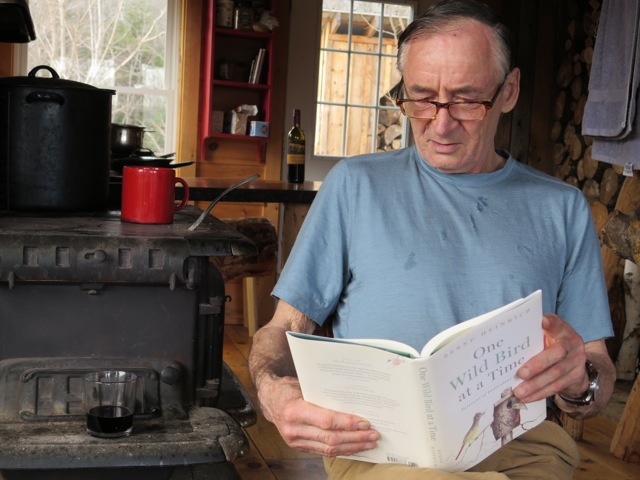
Bernd Heinrich in his cabin in Maine. 
Photo from Naturalist Notebook.

A video of an amazing talking starling.

American Woodcock Dance

Burrowing Owls Video

This is a photo from our first meeting. We look forward to more
interesting and fun books and discussions.