Thursday, February 3, 2022

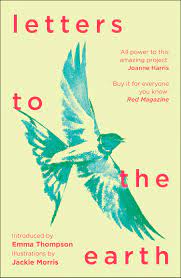
Letters to the Earth: Writing to a Planet in Crisis, Introduction by Emma Thompson


Summary (Amazon): "How can we begin to talk about what is happening to the world? How can we explain to our children, and to ourselves, what the future of our planet might look and feel like?

Letters to the Earth is the beginning of a new conversation. One that attempts to answer some of these questions by listening to the voices of parents and children; politicians and poets; songwriters and scientists. Gathering together over 100 letters written in response to the climate emergency, each entry begins to give language to the unspeakable, and shows how our collective power is present when we are ready to slow down and listen to each other.

It’s natural to feel worried or concerned about what the future of the earth holds. These letters are an opportunity to reflect on our connection to the planet and each other in times of crisis. They are also an opportunity to act and respond to this crisis. To put pen to paper and make your voice heard.

Includes contributions from activist Yoko Ono, actor Mark Rylance, poet Kate Tempest, author Laline Paull, illustrator of The Lost Words Jackie Morris, novelist Anna Hope, environmental writer Jay Griffiths Green Party MP Caroline Lucas. , Booker prize Winning author Ben Okri and actor Freya Mavor. "


Website for the Project: https://www.letterstotheearth.com/


Community and Education Toolkits for Writing a Letter: https://www.letterstotheearth.com/community-education


Facebook Pagehttps://www.facebook.com/letterstotheearth/


Organizations involved:


1. Climate Generation: https://www.climategen.org/blog/write-a-letter-to-the-earth-a-short-term-climate-writing-project/


Videos about the Project


1. https://www.youtube.com/watch?v=g8a1LEJPSbw


2. https://www.youtube.com/watch?v=E7As6yfmZf4


3. https://www.youtube.com/watch?v=hcPI7W3_cog


4. https://www.letterstotheearth.com/


5. Shakespeare's Globe Letter to the Earth: https://www.youtube.com/watch?v=LRXqNNBP8jo


6. https://www.youtube.com/watch?v=r-2xm905zd8

Reviewhttps://joyzine.org/2021/02/18/book-review-letters-to-the-earth-writing-to-a-planet-in-crisis-various-authors/


(https://www.rosekennedygreenway.org/love-letters-to-the-earth/)


This is a different book for our group. 


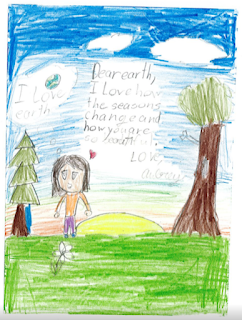
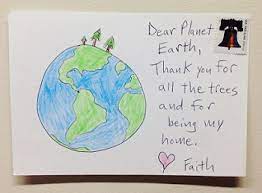
Since it's February, let's write a "Love Letter" to the Earth.


Please consider submitting here: https://www.letterstotheearth.com/submit-your-letter

(Bostonschildrenmuseum.org)


Discussion Questions:


Thursday, December 16, 2021

Every Day the River Changes: Four Weeks Down the Magdalena by Jordan Salama


SummaryAn American writer of Argentine, Syrian, and Iraqi Jewish descent, Jordan Salama tells the story of the Río Magdalena, nearly one thousand miles long, the heart of Colombia. This is Gabriel García Márquez’s territory—rumor has it Macondo was partly inspired by the port town of Mompox—as much as that of the Middle Eastern immigrants who run fabric stores by its banks.
 
Following the river from its source high in the Andes to its mouth on the Caribbean coast, journeying by boat, bus, and improvised motobalinera, Salama writes against stereotype and toward the rich lives of those he meets. Among them are a canoe builder, biologists who study invasive hippopotamuses, a Queens transplant managing a failing hotel, a jeweler practicing the art of silver filigree, and a traveling librarian whose donkeys, Alfa and Beto, haul books to rural children. Joy, mourning, and humor come together in this astonishing debut, about a country too often seen as only a site of war, and a tale of lively adventure following a legendary river.


Reviews:

Laguna del Magdalena (https://www.guatevalley.com)


Filigree jewelry ring from Mompox


Interviews:
Lithub: https://lithub.com/jordan-salama-on-journeying-colombias-magdalena-river/

Hippo issue and more:
Article: Slow Boat up the Magdalena: https://thecitypaperbogota.com/travel/taking-the-slow-boat-up-the-magdalena-river/17807

Event: Join us virtually on January 27 @ 6:00 p.m. for a Conversation with the Author about his new book. Please visit Doylestown Bookshop for more information. https://www.doylestownbookshop.com/event/virtual-book-club-nature-lovers-13

Discussion Questions:


Columbia River (outsideonline.com)

Discuss

Thursday, November 4, 2021

The Soul of an Octopus by Sy Montgomery


Summary and Reviews: (From the Publisher):

Finalist for the National Book Award for Nonfiction * New York Times Bestseller * Starred Booklist and Library Journal Editors’ Spring Pick * A Huffington Post Notable Nonfiction Book of the Year * One of the Best Books of the Month on Goodreads * Library Journal Best Sci-Tech Book of the Year * An American Library Association Notable Book of the Year

“Sy Montgomery’s The Soul of an Octopus does for the creature what Helen Macdonald’s H Is for Hawk did for raptors.” —New Statesman, UK

“One of the best science books of the year.” —Science Friday, NPR

Another New York Times bestseller from the author of The Good Good Pig, this “fascinating…touching…informative…entertaining” (Daily Beast) book explores the emotional and physical world of the octopus—a surprisingly complex, intelligent, and spirited creature—and the remarkable connections it makes with humans.

In pursuit of the wild, solitary, predatory octopus, popular naturalist Sy Montgomery has practiced true immersion journalism. From New England aquarium tanks to the reefs of French Polynesia and the Gulf of Mexico, she has befriended octopuses with strikingly different personalities—gentle Athena, assertive Octavia, curious Kali, and joyful Karma. Each creature shows her cleverness in myriad ways: escaping enclosures like an orangutan; jetting water to bounce balls; and endlessly tricking companions with multiple “sleights of hand” to get food.

Scientists have only recently accepted the intelligence of dogs, birds, and chimpanzees but now are watching octopuses solve problems and are trying to decipher the meaning of the animal’s color-changing techniques. With her “joyful passion for these intelligent and fascinating creatures” (Library Journal Editors’ Spring Pick), Montgomery chronicles the growing appreciation of this mollusk as she tells a unique love story. By turns funny, entertaining, touching, and profound, The Soul of an Octopus reveals what octopuses can teach us about the meeting of two very different minds.


Film on Netflix: My Octopus Teacher: https://www.netflix.com/in/title/81045007

Interviews:
2. Ted Talk: Do Animals Think and Feel: https://www.youtube.com/watch?v=aI4II5AbjPA

Discussion Questions will come from this Reading Group Guide:


Monday, October 4, 2021

Half-Earth by Edward O. Wilson


Summary (Amazon): 
In his most urgent book to date, Pulitzer Prize–winning author and world-renowned biologist Edward O. Wilson states that in order to stave off the mass extinction of species, including our own, we must move swiftly to preserve the biodiversity of our planet. In this "visionary blueprint for saving the planet" (Stephen Greenblatt), Half-Earth argues that the situation facing us is too large to be solved piecemeal and proposes a solution commensurate with the magnitude of the problem: dedicate fully half the surface of the Earth to nature. Identifying actual regions of the planet that can still be reclaimed―such as the California redwood forest, the Amazon River basin, and grasslands of the Serengeti, among others―Wilson puts aside the prevailing pessimism of our times and "speaks with a humane eloquence which calls to us all"


Reviews:


(NY Times)

Interview:


October 22, 2021 Half Earth Day Virtual Summit

 Registration: https://eowilsonfoundation.org/page/4/


Bialowieza Forest (Wilderness Society)

Discussion Questions:


French Guiana (wiki)


Saturday, September 4, 2021

The Planter of Modern Life by Stephen Heyman


Summary (from book's website): "
Louis Bromfield was a World War I ambulance driver, a Paris expat, and a Pulitzer Prize–winning novelist as famous in the 1920s as Hemingway or Fitzgerald. But he cashed in his literary success to finance a wild agrarian dream in his native Ohio. The ideas he planted at his utopian experimental farm, Malabar, would inspire America’s first generation of organic farmers and popularize the tenets of environmentalism years before Rachel Carson’s Silent Spring.

A lanky Midwestern farm boy dressed up like a Left Bank bohemian, Bromfield stood out in literary Paris for his lavish hospitality and his green thumb. He built a magnificent garden outside the city where he entertained aristocrats, movie stars, flower breeders, and writers of all stripes. Gertrude Stein enjoyed his food, Edith Wharton admired his roses, Ernest Hemingway boiled with jealousy over his critical acclaim. Millions savored his novels, which were turned into Broadway plays and Hollywood blockbusters, yet Bromfield’s greatest passion was the soil.

In 1938, Bromfield returned to Ohio to transform 600 badly eroded acres into a thriving cooperative farm, which became a mecca for agricultural pioneers and a country retreat for celebrities like Humphrey Bogart and Lauren Bacall (who were married there in 1945).

This sweeping biography unearths a lost icon of American culture, a fascinating, hilarious and unclassifiable character who―between writing and plowing―also dabbled in global politics and high society. Through it all, he fought for an agriculture that would enrich the soil and protect the planet. While Bromfield’s name has faded into obscurity, his mission seems more critical today than ever before."

Reviews:

1. Kirkus Reviews: https://www.kirkusreviews.com/book-reviews/stephen-heyman/the-planter-of-modern-life/

2. Wall Street Journal: https://www.wsj.com/articles/the-planter-of-modern-life-review-raising-the-bar-11587133008


Website for the Book: https://www.theplanterofmodernlife.com/

Publisher Site: https://wwnorton.com/books/9781324001898

Malabar Farm Foundation: https://malabarfarm.org/

E.B White's Poem, "Malabar Farm", published in the New Yorker (1948):


. . . Strangers arriving by every train,

Bromfield terracing against the rain,

Catamounts crying, mowers mowing,

Guest rooms full to overflowing,

Boxers in every room of the house,

Cows being milked to Brahms and Strauss,

Kids arriving by van and pung,

Bromfield up to his eyes in dung,

Sailors, trumpeters, mystics, actors,

All of them wanting to drive the tractors,

All of them eager to husk the corn,

Some of them sipping their drinks till morn […]

Films:

1. The Rains Came (1939): https://www.youtube.com/watch?v=bkdQ95XEiY8

2. "The Land" Documentary (1942): https://www.youtube.com/watch?v=e-fAga_Yf10


(Malabar Farm: Ohiotraveler.com)

Interviews with Author:

1. National Endowment of the Humanities: https://www.neh.gov/blog/planter-modern-life-qa-stephen-heyman

2. Hudson Library: https://www.youtube.com/watch?v=sEAlxErPtA8

Discussion Questions:


(Louis Bromfield and the farm: richlandsource.com)


Monday, July 26, 2021

Spirals in Time by Helen Scales


Summary: (Amazon): Seashells are the sculpted homes of a remarkable group of animals: the molluscs. These are some of the most ancient and successful animals on the planet.

But watch out. Some molluscs can kill you if you eat them. Some will kill you if you stand too close. That hasn't stopped people using shells in many ways over thousands of years. They became the first jewelry and oldest currencies; they've been used as potent symbols of sex and death, prestige and war, not to mention a nutritious (and tasty) source of food.

Spirals in Time is an exuberant aquatic romp, revealing amazing tales of these undersea marvels. Helen Scales leads us on a journey into their realm, as she goes in search of everything from snails that 'fly' underwater on tiny wings to octopuses accused of stealing shells and giant mussels with golden beards that were supposedly the source of Jason's golden fleece, and learns how shells have been exchanged for human lives, tapped for mind-bending drugs and inspired advances in medical technology. Weaving through these stories are the remarkable animals that build them, creatures with fascinating tales to tell, a myriad of spiralling shells following just a few simple rules of mathematics and evolution.

Shells are also bellwethers of our impact on the natural world. Some species have been overfished, others poisoned by polluted seas; perhaps most worryingly of all, molluscs are expected to fall victim to ocean acidification, a side-effect of climate change that may soon cause shells to simply melt away. But rather than dwelling on what we risk losing, Spirals in Time urges you to ponder how seashells can reconnect us with nature, and heal the rift between ourselves and the living world.

Reviews:

Kirkus: https://www.kirkusreviews.com/book-reviews/helen-scales/spirals-in-time/

Wall Street Journal: https://www.wsj.com/articles/natures-architects-1439579229

The Economist: https://www.economist.com/books-and-arts/2015/07/18/shell-company

(Amazon)

Author's Websitehttps://helenscales.com/spirals-in-time/

(Newscientist.com)

Interviews: 

BBC: Radio 4: https://www.bbc.co.uk/programmes/b05r0b31

Talks at Google: https://www.youtube.com/watch?v=9OFs5W3KULo

Royal Geographical Society: https://www.youtube.com/watch?v=RxkGz8yIn_8

Articles and Videos:

1. "Digital Seashells and David Raup": https://www.deepseanews.com/2015/07/digital-seashells-and-david-raup/

2. "David Raup, Who Transformed the Field of Paleontology Dies at 82": https://www.nytimes.com/2015/07/16/us/david-m-raup-who-transformed-field-of-paleontology-dies-at-82.html

3. Article and Video: Argonauts: https://oceanconservancy.org/blog/2020/10/05/paper-nautilus/https://www.theguardian.com/science/2018/mar/27/argonauts-the-astronauts-of-the-sea

Discussion Questions: (John will be leading the discussion and here are his questions.)


Saturday, June 26, 2021

The Last Butterflies by Nick Haddad


Summary (Princeton University Press): Most of us have heard of such popular butterflies as the Monarch or Painted Lady. But what about the Fender’s Blue? Or the St. Francis’ Satyr? Because of their extreme rarity, these butterflies are not well-known, yet they are remarkable species with important lessons to teach us. The Last Butterflies spotlights the rarest of these creatures―some numbering no more than what can be held in one hand. Drawing from his own first-hand experiences, Nick Haddad explores the challenges of tracking these vanishing butterflies, why they are disappearing, and why they are worth saving. He also provides startling insights into the effects of human activity and environmental change on the planet’s biodiversity.

Weaving a vivid and personal narrative with ideas from ecology and conservation, Haddad illustrates the race against time to reverse the decline of six butterfly species. Many scientists mistakenly assume we fully understand butterflies’ natural histories. Yet, as with the Large Blue in England, we too often know too little and the conservation consequences are dire. Haddad argues that a hands-off approach is not effective and that in many instances, like for the Fender’s Blue and Bay Checkerspot, active and aggressive management is necessary. With deliberate conservation, rare butterflies can coexist with people, inhabit urban fringes, and, in the case of the St. Francis’ Satyr, even reside on bomb ranges and military land. Haddad shows that through the efforts to protect and restore butterflies, we might learn how to successfully confront conservation issues for all animals and plants.


(Princeton Press)

North American Butterfly Association: https://www.naba.org/

Interviews:

(St Francis Satyr - Wikipedia)

Articles: 

Celebrate All Butterflies in July at Bucks Audubon with these exciting upcoming events:
Register here: Go to July on the Calendar and Click on the different events to register:


July 8 @ 7 p.m.              Monarch Migration Trip Virtual Presentation

July 22 @ 6:00 p.m.       Nature Lover's Book Club Meeting - Note we are meeting earlier!!

July 22 @ 7:00 p.m.       Butterfly Count Virtual Presentation

July 24 @ 12:00 p.m.     North American Butterfly Count on site at Bucks Audubon

July 31 @ 4:00 p.m.      Documentary Virtual Showing of "Beauty on the Wing"  with the filmmaker, Kim Smith
                                       Here's the film's website: https://monarchbutterflyfilm.com/

Discussion Questions: (Heidi will be leading the discussion.)

1. There is so little known about the natural history of rare butterflies, even common ones. Getting down to basics, what do you know about butterflies? How would you describe them? What is their lifecycle? (p. 8) What do they need to be successful? How are butterflies and moths different? (p. 65)


2. What is your experience with them? Do you have a butterfly garden or offer plants that might attract them? What kind of plants do you include? Any host plants? Are you trying to attract any specific ones? Have you raised any?


3. What is the goal and scope of the author for this book? (p. 7) Were you familiar with any of the rare butterflies discussed in the book? Why are they worth studying? (p. 210)


4. Discuss the issues that are causing the decline of butterflies? What future issues might impact them? (p. 106)


5. What are some of the methods used to count butterflies and discuss the varied challenges. Which Community Science projects are there for butterflies? Have you participated in any?


6. There are truly some remarkable stories shared with many unexpected twists and turns. Which ones did you especially find interesting? Surprising? What relationships do some butterflies have with beaver? (p. 133-) Ants? (p. 176)


7. What are some of the restoration practices that can help improve population stability and even growth?


8. Has this book changed how you view butterflies? Are you hopeful? What steps can you take personally to help? 


(Fender's Blue - https://davethebugguy.org)